I've been ranting about this for nearly twenty years. The accounting treatment of people is broken, and almost nobody in a position to fix it is moving fast enough to matter. Bear with me while I get a little into the weeds.
It started with a 2006 email from a Whirlpool worker I called Bob, one of 500 people laid off from the Evansville factory just before Christmas. What Bob described was a company that had talked about lean for years without doing it, then disposed of those people when demand shifted. At the same time, Whirlpool was adding over a thousand jobs at plants in Indiana and Iowa and moving production to Ramos Arizpe, Mexico. As I wrote then: tens of thousands of years of manufacturing knowledge disposed of in Evansville, replaced by workers with a few weeks of experience, while severance charges got an easier reception from short-term shareholders than a long-term investment ever would. Turnover costs chronically underestimated. A pair of hands on day one worth the same as a pair of hands in year ten — or more, since they "cost" less.
That is some wacky accounting. Actually it's traditional accounting, and it makes perfect sense to a traditional accountant. That's the problem.
What the ledger actually says
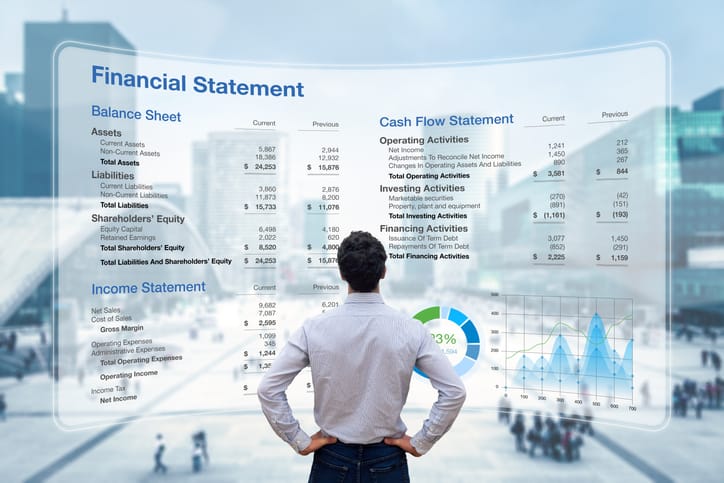
Under both US GAAP and IFRS, people appear on the P&L as pure expense: salaries, benefits, training, all of it flows straight to the income statement. They appear nowhere on the balance sheet as an asset. When a company disposes of equipment, accounting requires a write-off, recognizing the removal of an asset and its remaining value. When a company lays off people, there's no corresponding balance sheet entry. The income statement shows an improvement. The asset — years of accumulated knowledge, problem-solving capability, customer relationships, institutional memory — simply disappears from the books without trace, because it was never there to begin with.
Equipment depreciates. Human capital, in most cases, does the opposite. A machinist with twenty years of experience on a specific process is more valuable than on day one, not less. The accounting treatment isn't just incomplete; it's directionally backwards relative to reality.
What others are trying to do about it
The problem isn't unrecognized. It's just very hard to fix within existing frameworks.
Wharton professors Peter Cappelli and Daniel Taylor have petitioned the SEC to require three modest disclosure changes within the existing GAAP framework: require companies to identify what proportion of workforce costs represent investment in future growth; treat workforce costs as a standalone line item rather than burying them in administrative expenses; and disaggregate labor costs in income statements so investors can see their contribution to major expense categories. Their core argument: under current rules, investors literally cannot distinguish between payroll and heating bills. Both are just operating expense. The market penalizes companies that invest in their people the same way it would penalize any cost increase, because it has no way to tell the difference.
The SEC took a small step in 2020, amending Regulation S-K to require public companies to disclose "material" human capital information in their annual filings. The principles-based approach gave companies wide latitude, no standardized metrics, and no definition of "human capital." The result has been predictably uneven. The ISSB, which oversees international standards, has human capital disclosure as an active research project through 2026, but is still in research mode rather than standard-setting. The World Economic Forum and Willis Towers Watson have published voluntary frameworks for human capital accounting that a handful of progressive companies have adopted. Progress, but slow and voluntary, which in accounting terms means largely theoretical.
A thought experiment
ASC 842, the lease accounting standard, went into effect for most public companies in 2019 and was a genuine headache to implement. Companies that had been keeping operating leases off their balance sheets — buildings, equipment, vehicles — suddenly had to recognize right-of-use assets and corresponding lease liabilities, in some cases adding billions to both sides of the balance sheet overnight. The logic was simple: if you're using an asset you don't own for an extended period and have an obligation to pay for it, that obligation belongs on the balance sheet. Hiding it in footnotes doesn't make it real.
What if employees thought of their knowledge, creativity, and experience as their own asset, and companies entered into a long-term agreement for access to that asset? Under that framing, a hire isn't a cost transaction; it's a lease. The company gains a right-of-use asset (the human capital being accessed) and incurs a corresponding lease liability (the present value of future compensation). Early termination of the lease — a layoff — would require recognizing a loss, not booking a gain. The favorable P&L impact of eliminating salary expense would be offset by the balance sheet cost of terminating the agreement. Suddenly the accounting math on layoffs looks very different.
I'm not proposing this to the FASB. The control problem alone is enough to stop any serious accounting proposal: buildings can't quit, and the entire framework depends on the lessee controlling the asset. But as a mental model for what the current treatment obscures, it's clarifying. If you ran the numbers the way ASC 842 runs them for a building, most layoff decisions would look considerably less attractive on paper.
The more interesting provocation is the first half of the thought experiment: people actually owning their intellectual assets and seeking the highest-value deployment of them. The labor market already works this way to some degree. Companies that invest in developing people, offer security, and create conditions for capability to grow get more from the relationship. Companies that treat people as interchangeable get what they're paying for.
The reshoring proof
Companies that offshored manufacturing for labor cost savings are now discovering that the knowledge they discarded doesn't reconstitute when they come back. The Reshoring Initiative has documented that most offshoring decisions miscalculate true costs by 20 to 30 percent, once supply chain risk, quality, lead times, and inventory costs are factored in. What that analysis still doesn't fully capture is the tribal knowledge — the undocumented expertise built over years of experience — that evaporated when the decision was made. That was the unrecorded balance sheet write-down, showing up years later as a skills gap that money alone can't quickly fix.
Whirlpool's Bob saw it in 2006. The companies now struggling to reshore are learning it the hard way in 2025.
The real question
The accounting standards won't change quickly. The SEC's 2020 disclosure rule was a small step that produced limited standardization. ISSB is still researching. Cappelli and Taylor are still petitioning.
So the question for leaders is whether they're willing to do the calculation in their heads that the ledger refuses to do for them. The balance sheet doesn't record what walks out the door. That doesn't mean it isn't real. I've been making that argument since at least 2006, and again in 2011, and in 2015, with no signs of stopping.
Maybe one day the accountants will catch up.