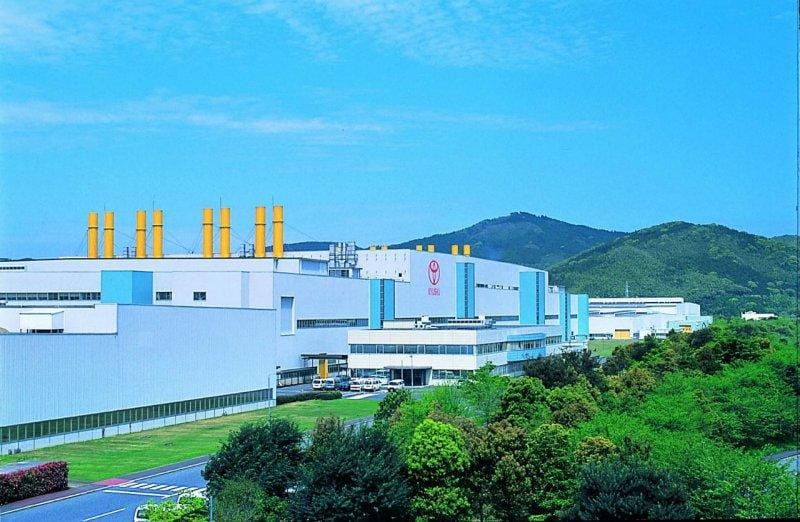
Jon Miller wrote something a few years ago at Gemba Academy that has stayed with me. The Toyota Way's second pillar is universally translated as "respect for people," but the original Japanese is ningensei (人間性), which means "human nature." The distinction matters more than it appears. "Respect for people" is a floor — be courteous, invest in training, don't humiliate anyone in public. Most organizations can claim this with a straight face. "Respect for human nature" asks something harder: what are people fundamentally capable of, and what conditions allow that capability to develop?
That reframe came back to me recently when I encountered Inamori Kazuo's six decision questions, the same framework he used to build Kyocera, found KDDI, and then — at age 78, for a salary of ¥1 per year — return Japan Airlines to profitability in 24 months. (The full list, with brief explanations, is at the end of this post.) One question in particular lands differently through Jon's lens: "Does this decision create value for customers, employees, and society?" Society is in there explicitly. So is the long-horizon question: "Will I still be proud of this decision in 30 years?" These aren't business questions with a human veneer. They're human questions applied to business.
The conference room wall test
Walk into almost any company and you'll find some version of "people are our most important asset" — on the wall, in the annual report, in the employee handbook. It costs nothing to say. The real test is what happens when keeping that commitment becomes expensive.
I know something about this firsthand. In 2001 I was running a photonics equipment manufacturing operation that had been genuinely transformed by the creativity, knowledge, and passion of the people in it. Production capacity had quintupled in under a year in the same floor space. Quality was near perfect. We had built something real. When the telecom bubble collapsed and demand dried up almost overnight, I fought to keep the operation intact. Drove hundreds of miles on 15 minutes' notice to make the case to corporate. It didn't matter that our technology was superior. It didn't matter that labor was a small fraction of total cost, or that our operation was orders of magnitude more efficient than theirs. Traditional financial thinking said manufacturing had to contract, and remote operations were difficult to control. On September 10th, 2001, I laid off over 150 brilliant people, including myself. The terror of the next morning reframed the prior day considerably.
The lesson I took wasn't that the fight wasn't worth having. It was that a single leader fighting mid-battle isn't enough. People-centric principles have to be embedded at the very top of an organization, above the level where traditional financial metrics hold pure sway. Otherwise, when the pressure comes, the principle loses.
Philosophy as policy
The leaders and organizations that have actually lived ningensei didn't leave it to individual managers to fight that battle each time. They built it into the structure before any crisis arrived.
Toyota's answer is embedded in the lean system itself. Ask workers to surface waste and improve processes, and rational workers immediately wonder whether their ideas might eliminate their own jobs. Toyota's response was an explicit covenant: no full-time employee would be laid off as a result of kaizen. Displaced workers would be redeployed or retrained. This isn't generosity — it's the mechanical precondition for genuine engagement. Without job security, continuous improvement becomes a management extraction exercise dressed up as collaboration. The 2011 earthquake and tsunami shut down parts supply across Japan. Toyota kept its 25,000 North American workers on, using the downtime for training. There were no layoffs.
Lincoln Electric in Cleveland made a similar commitment, more formally. James Lincoln built an explicit no-layoff guarantee into the operating model in the 1950s, paired with a generous incentive system. The guarantee held through multiple recessions over decades. The argument was unsentimental: you cannot ask workers to be efficient and innovative if they bear all the downside risk of their own efficiency. During downturns, hours were cut before people were cut, and the company absorbed the pain rather than exporting it to the workforce.
Robert Chapman at Barry-Wehmiller applied the same logic during the 2008 financial crisis. Rather than cut anyone, he implemented mandatory furloughs across the entire company — himself included — 4 weeks unpaid, spread across the year. His framing: "better that we should all share the pain than that any of us should bear it all." The sacrifice ran from the factory floor to the executive suite in equal measure. Aaron Feuerstein at Malden Mills kept 3,000 workers on full payroll out of his own pocket after a factory fire in 1995. Both men acted from character. The distinction worth noting is that Lincoln Electric and Toyota acted from policy — a commitment made before the crisis, held through it.
The precondition nobody talks about
There's an accounting problem underneath all of this, and it deserves its own post (coming soon). The short version: people appear on the P&L as pure expense — salaries, benefits, training. They appear nowhere on the balance sheet as an asset. So when a company lays people off, the financial statements show an unambiguous improvement, with no corresponding write-down of the creativity, experience, and institutional knowledge that just walked out the door. Unlike disposing of equipment, there's no balance sheet entry to force the real cost into the calculation. Traditional accounting doesn't just fail to capture the value of people; it actively creates the financial incentive to discard them.
The harder question first
None of this is to say that businesses never contract, or that hard decisions never have to be made. Sometimes they do. But it's worth asking whether contraction itself — the inability to grow, adapt, or pivot — is partly a failure of leadership imagination rather than an immovable market reality. And even when genuine contraction is unavoidable, the knee-jerk reach for layoffs skips the question that should come first: how do I better utilize the pent-up value sitting in the knowledge, creativity, and experience of these people? Financial statements don't answer that question; they don't even ask it. A balance sheet that carries equipment and goodwill but not human capital is structurally blind to the asset being discarded. Real leaders recognize that gap and think harder before pulling the lever that the accounting system makes look costless.
The actual question
We're in a period when a lot of people are feeling genuinely vulnerable to AI, to economic uncertainty, to decisions being made well above their heads. The anxiety is real and it isn't irrational.
Here's a direct question for any leader reading this: would you take a pay cut to save your people? Would you push that cut harder on management than on the floor, since it's management's job to grow or pivot the business? Would you sacrifice a quarter's margin to hold a team together? And if you wouldn't, or couldn't, because the principle was never actually embedded above you, what does that say about what "people are our most important asset" actually means in your organization?
Jon's translation of ningensei cuts through the comfortable version of the answer. Respecting people is a floor. Respecting human nature — what people are capable of when they feel safe, trusted, and valued — is a ceiling most organizations never seriously reach for. The ones that do tend to outperform over time, not despite the commitment, but because of it.
Which leaders have the guts to find out?
Inamori's six questions
Inamori Kazuo applied these questions consistently across Kyocera, KDDI, and his JAL turnaround. They read simply. They aren't.
- Is it the right thing to do as a human being? The frame is deliberately personal, not professional. Inamori believed most ethical failures in business come from leaders who shift their moral standards depending on the role they're in. Keeping the frame constant is the discipline.
- Are we doing this for the right reason? Strip away the strategic rationale, the competitive pressure, the board expectation. What's the actual intention behind the decision?
- Have we put in the maximum effort, every day? Not "are we working hard." Whether we are genuinely committed to continuous improvement, with consistency and sincerity, not just when it's convenient.
- Does this decision create value for customers, employees, and society? Most businesses optimize for one stakeholder, tolerate a second, and ignore the third. Alignment across all three is the test.
- Will I still be proud of this decision in 30 years? The long horizon changes the nature of the decision itself. Short-term pressures that feel urgent tend to look different from three decades out.
- Are we controlling our emotions, or are our emotions controlling us? The question acknowledges that emotional reactions masquerade as strategy. Naming the question before the decision creates a brief but useful pause.