Time flies, but some memories - and the lessons from them - remain vivid.
In late 2000 I decided to pivot from over ten years in medical device manufacturing to run a factory in the hyper growth telecom sector. We built laser photonics test equipment, the gear that tested the laser drivers sitting at both ends of long-haul fiber optic cables. Demand was growing rapidly, we had a backlog of over a year, and the factory floor was struggling.
Over the next few months into 2001 we leveraged tools and concepts like a morning standup meeting, obeya, visual controls, kanban, kaizen, and standard work to take the operation from $1M a month to $5M a month in the same floorspace with the same people. Lean works. We were loving our success, as was our parent company.
The first cancellation came in March of 2001. One order, pulled out of a backlog that by then ran eighteen months deep. We spent a couple minutes on that cancellation in a meeting, decided the customer had a budget problem, and went back to the thing we were actually excited about, which was figuring out how to grow capacity even further. A curiosity. That's the honest word for how we handled it.
We saw a couple more cancellations each month after that, with a large number in July. We were still recruiting and looking at additional factory space. By August we had investigated enough to understand that this was a structural problem, with the industry concerned that there wasn't enough data to light up the millions of miles of fiber optic being laid, coupled with advances in multiplexing that radically increased the data density of existing fiber.
The backlog dried up overnight, literally in less than a month, and the next three weeks was a misery of difficult meetings and decisions with corporate.
On September 10th, 2001, I announced the closure of the factory and laid off more than 150 brilliant people. Driving in the next morning, September 11th, rehearsing how I'd talk to the press and to the folks I'd just told would be losing their jobs in a couple weeks, I heard the first news out of New York. That put our supposed misery back into perspective. I wrote in more detail about both of those days fifteen years ago, on the tenth anniversary.
What blinded us was a project that was working. The transformation was real, our commitments were finally being kept, first pass yield was near perfect. When what you're doing is succeeding, a single cancellation reads as noise, because in almost every month of almost every year that's exactly what it is.
The déjà vu of AI
Last month, almost 25 years after the story I just told you, Apollo's Chief Economist, Torsten Slok, wrote that at the height of the telecom fiber boom in 2000 the capex investment was 1.2% of GDP. AI hyperscaler capex investment in 2025 was already 1.4% of GDP and is expected to be 3% or greater in 2027. He makes a similar comparison to the housing boom in 2025.
The most recent GE Vernova earnings release mentions that AI energy needs are helping to drive their increasing gas turbine backlog, and order backlog combined with slot reservation agreements hit 116 GW in the second quarter. They're now taking reservations for 2031 delivery.
Eighteen months of backlog felt unassailable to me in 2001. Five years of it must feel like... well, I can't even imagine.
Another example: Nebius disclosed AI compute capacity pricing for the first time, with one to three year contracts at $20M to $25M per megawatt annually and short-duration deals at $40M to $50M. Short duration at double the long term pricing could be urgency.
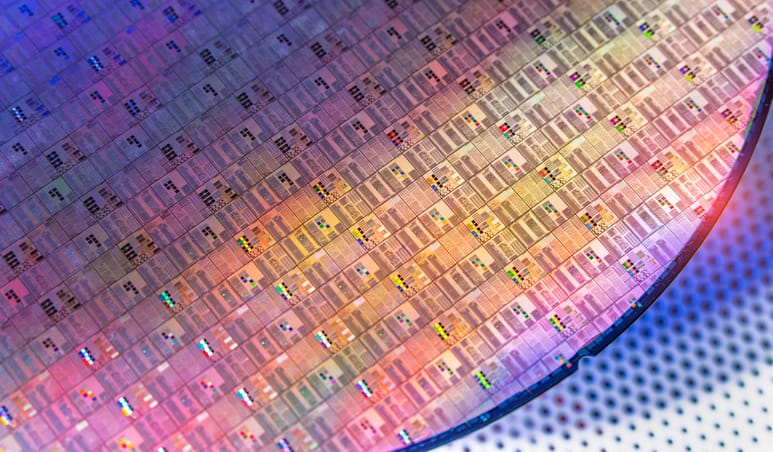
Similar situations may exist with the dramatic scaling of AI chip backlog and fab capacity.
Why this time may be different
Plenty of people are already drawing the line from fiber to AI. Capital pouring into physical infrastructure on the strength of a demand curve nobody has actually observed yet, financed on conviction, measured by backlog. The technology really was the future in 1999, and by 2002 less than 10% of the fiber in the ground was lit. The tech was real and the money was still wrong - or at least a few years premature. So the feeling is legitimate.
Before you dive into AI pessimism, I'll tell you why it could be a different story this time. Maybe.
GE Vernova reports slot reservations separately from firm orders, and reports the conversion between the two every quarter. They converted 10 GW of reservations into orders in Q2. That disclosure is the instrument I didn't have. My backlog was one number, so a cancellation vanished into it. Their reservation pool is a visible staging area, and a customer walking away from a 2031 slot shows up as a conversion rate that stops climbing.
The customer mix helps too: roughly 80% of that contracted capacity sits with utilities, independent power producers, and industrials, with about 20% tied to data center load. Long-haul fiber had one story. Electricity demand has several running at once, including coal retirements that need firming capacity and an electrification of transport and industrial heat that proceeds on its own schedule. Most of those can survive an AI disappointment without much trouble.
The Nebius premium is for delivery speed, and management is deliberately holding capacity back from long contracts to capture it. The widely quoted 22-month payback is an estimate built on forecast costs and capacity not yet built, and the first short-duration deal actually closed a quarter after the pricing range was announced.
Fiber was a twenty-five year asset with almost no marginal cost once it was lit. A glut had nowhere to go. The capacity sat in the ground getting cheaper, and it took the better part of fifteen years for demand to grow into it.
An AI GPU gets physically superseded and replaced roughly every three years, so a compute overbuild liquidates itself by attrition. Same overbuild, wildly different half-life. Longer and choppier is a more plausible shape here than 1999-2001 playing again.
What I'd watch
Two numbers, both live rather than historical. GE Vernova's conversion rate of slot reservations into firm orders, quarter over quarter, because that's where a customer changes its mind first and cheapest. And Nebius' spread between short-duration and long-duration compute pricing, watching the spread rather than the level, because a premium paid for immediate delivery is a scarcity signal and the day it starts compressing toward the long-term rate is the day scarcity ended. Both are disclosed, and boring enough that a move in either could pass a full quarter without comment.
Twenty-five years ago I had good data, a good team, and a project that was genuinely working, and I still classified the first signal as a curiosity and went back to the capacity plan. The classification was reasonable. It was also wrong, and it took me six months and 150 people to find that out.
So here's what I'd ask anyone involved in this AI or AI-related buildout, or anyone lucky enough to be sitting on a very large backlog of orders: what are you calling a curiosity right now, and when did you last go back and look at it again?
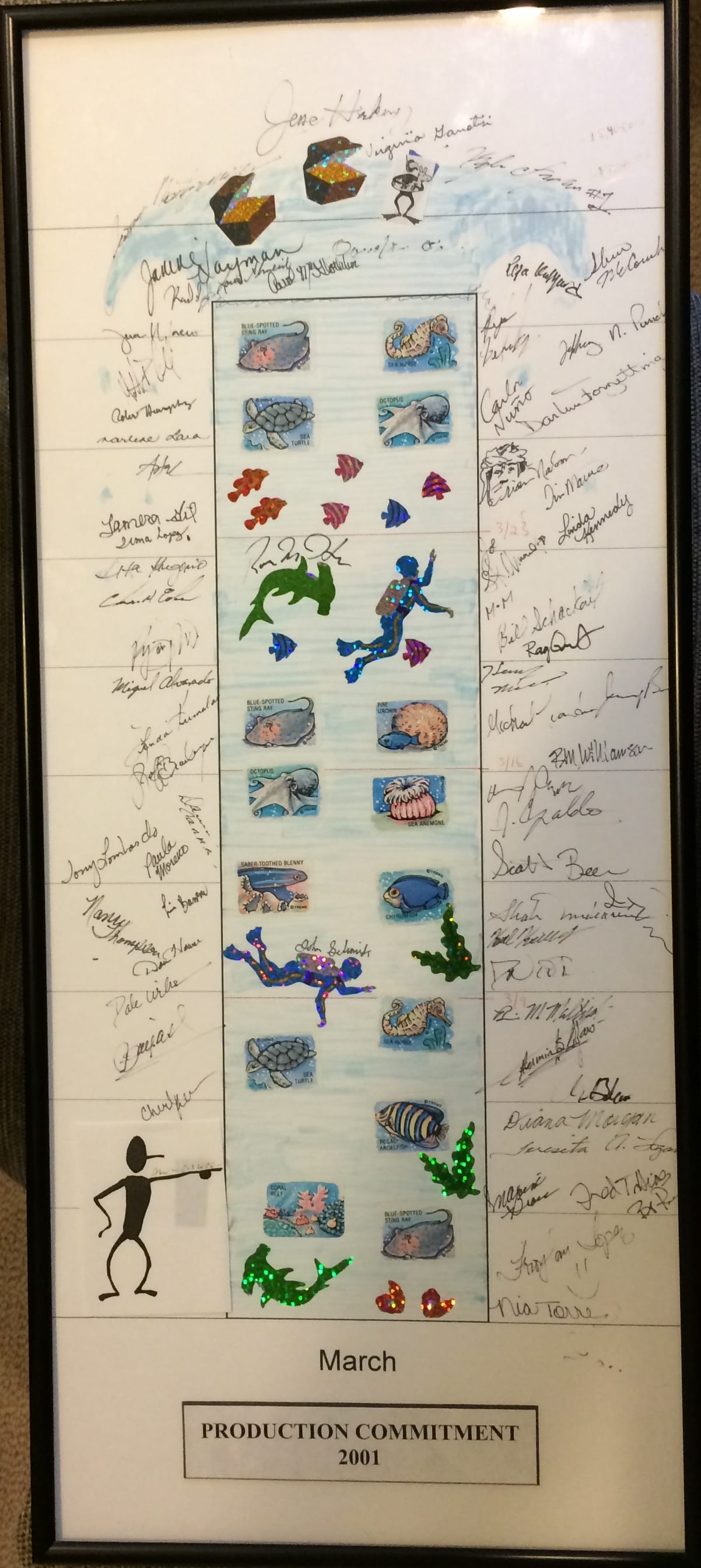
I still have the production chart from the morning meeting, framed on my home office wall, from the month we hit the $5M monthly goal - and then some. Each morning we'd manually color in the bar chart, with increasingly excited and proud folks adding some "customization" and signing their names. Somehow it turned into an overflowing fish tank! What a great feeling when lean works and you achieve the seemingly impossible!
And it remains on my wall as a sober lesson of what happened just a few months later. Early curiosities can be important signals.