Intellectual Fitness Requires Intention
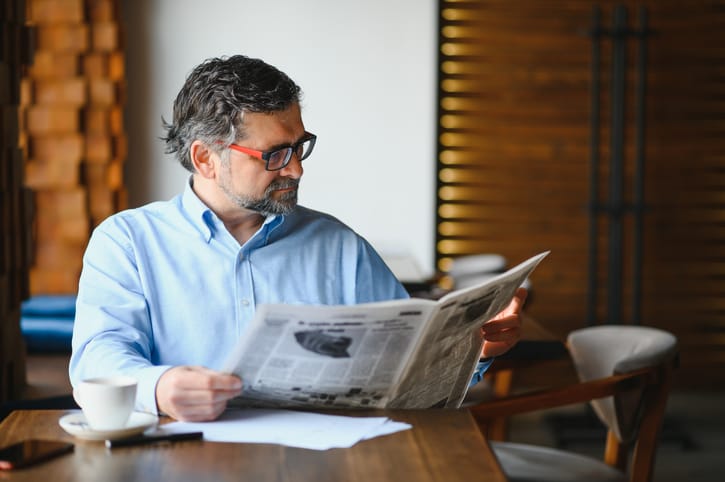
I've been waking up at 4:30am for the better part of three decades. In the early years it wasn't a choice so much as a condition of the job: I was managing a factory with a first shift that started at 6am, plus a commute, so the math was unforgiving. But that early morning slot became mine in a way nothing else was, quiet before the day's noise, and when the factory demands eventually lifted, I kept it. The gym filled the slot, the resulting fitness became its own reward, and the habit has followed me all the way into retirement when I could, in theory, sleep as late as I like. The hour is the point, not the convenience. I protect it because I've learned that anything worth doing consistently requires a protected time before the day's friction makes skipping easy.
I've been thinking about whether the same logic applies to something I'd call intellectual fitness. I think it does, and with more urgency than I previously appreciated.
A couple of recent posts have been working on this problem from different angles. The Attention Apocalypse looked at what the short-form social media diet is doing to our capacity for sustained attention and complex thought. When Knowledge Loses Its Compass argued that the deeper problem isn't just volume, it's that we've lost the shared criteria for distinguishing what's actually true from what merely sounds plausible. Both diagnoses feel right, and they compound each other in ways I find genuinely alarming. But there's a third layer I didn't fully address: the medium itself.
What We Lost When We Stopped Reading Newspapers
There was a time, not that long ago, when reading a newspaper cover to cover was a normal morning ritual. The local paper, the New York Times, the Wall Street Journal if you were in business. You sat with it, moved through it linearly, absorbed things you hadn't gone looking for, and finished with a reasonably coherent picture of the day's reality. The format imposed a kind of discipline: someone had made editorial decisions about what mattered and in what order, and you followed that logic whether you agreed with it or not. It was an imperfect epistemic commons, but it was a commons.
That's largely gone, replaced by the algorithmic feed, the email queue, and, if I'm being honest, the occasional game of Solitaire that I tell myself is keeping my mind active. (It isn't.) What replaced the newspaper isn't just shorter; it's pre-sorted. The feed doesn't show you the day's reality; it shows you a version of reality curated to confirm what you already believe and maximize the time you spend looking at it. That's not a bug, it's the business model.
The Screen Makes It Worse
It turns out that reading on screens is measurably worse for comprehension than reading on paper, and the research on this is now substantial. A 2024 meta-analysis of 49 studies found consistent comprehension advantages for paper across age groups and contexts. Researchers call it the "screen inferiority effect," and the gap widens specifically for information-dense, complex text, exactly the kind required to understand nuanced policy, geopolitical context, or anything that doesn't resolve into a headline. You can absorb a novel reasonably well on an iPad. A serious analysis of trade policy, considerably less so.
The mechanism is what researchers call the "shallowing hypothesis": constant exposure to fast-paced digital media trains the brain to process information rapidly and superficially, and that habit persists even when you're consciously trying to read carefully. The screen has trained us to skim, and we keep skimming even when we know we shouldn't. The one partial exception is dedicated e-readers, which minimize distractions and more closely approximate the experience of a page, though even those show a comprehension disadvantage for demanding material compared to paper.
So the environment most people use to consume news is actively degrading their ability to understand it. That's not a moral judgment; it's what the data shows.
The Source Problem
Even reading long-form carefully, there's the separate question of what you're reading. The instinct to "balance" an ideologically fragmented media landscape by consuming equal parts of opposing sources sounds reasonable but doesn't actually work. If two outlets are both selecting and framing evidence to support predetermined conclusions, averaging them doesn't produce truth; it produces a distorted average. Center isn't the midpoint between two poles. It's a different thing entirely, and finding it requires sources that are genuinely trying to report rather than persuade.
AI as a potential synthesizer, pulling from primary sources and stripping rhetorical packaging, is an appealing idea. The problem is that an AI trained on a distorted information ecosystem absorbs those distortions, and because the output arrives fluent and confident, it risks being more misleading than a source that at least signals its bias openly. We'd also be asking the primary driver of information volume to simultaneously solve the volume problem. (The arsonist running the fire department, though to be fair, sometimes that's the most motivated firefighter in the building.)
Showing Up for Your Brain
I now set aside an hour each morning, after the workout, specifically for long-form reading from sources I've deliberately chosen for their proximity to actual reporting over opinion. I've turned off all notifications on my iPad to reduce the friction of distraction during that hour. I read on paper when I can. I've even been wondering whether a dedicated e-reader, without social media and other applications competing for attention, would be worth the discipline it would enforce. The habit is still a work in progress, honestly, but the intent is fixed.
I don't present this as a particularly virtuous routine. People I know invest the same kind of protected, intentional time in spiritual practice, whether prayer, meditation, or something else that requires showing up before the day makes skipping easy. Working people go to the gym at 5am not because they have spare time but because they know that fitness enables everything else, and that if it isn't protected time it simply won't happen. Intellectual fitness belongs in the same category. It requires a deliberate decision that it matters, a time slot defended against the morning's other reasonable claims, and enough repetition for the habit to become its own reward.
The broader architecture of modern media isn't going to fix itself. The economic incentives run the wrong direction, the algorithmic defaults are optimized for engagement rather than orientation, and the institutions that once provided something like a shared epistemic commons have been largely displaced. That's the systemic reality, and individual discipline doesn't change it.
But individual discipline changes what it does to you. And at the moment, that might be the most honest answer available.