Lobio with Mchadi & Pomidvris Salati - Georgia's Everyday Anchor
From my Cooking the World Series...
Serves: 4
Total time: ~55 minutes active cooking
Diet: Vegan
Social & Historical Context
Lobio — the Georgian word for beans — is one of the most ancient and enduring dishes in the South Caucasus, predating the introduction of New World ingredients by centuries. In traditional Georgian culture, it occupies the same role that lentil dishes hold in Ethiopian cooking or beans in Mexican cuisine: the everyday anchor of the table, present at family meals, harvest celebrations, and religious fasts alike. What distinguishes Lobio from superficially similar bean stews across the region is the walnuts. Ground to a coarse paste and stirred in at the end, they transform the dish into something darker, earthier, and far more complex — a signature of the Georgian kitchen, which deploys walnuts the way French cuisine deploys butter: as a source of richness, body, and depth.
Georgia sits at the crossroads of the ancient Silk Road, and its cuisine reflects centuries of Persian, Ottoman, and Byzantine influence absorbed but never fully assimilated. The result is a flavor vocabulary unlike anything in Europe or the Middle East — coriander-forward spice blends, tart pomegranate and vinegar finishes, and a reliance on walnut pastes that feels simultaneously familiar and exotic to most Western palates. Lobio is the dish that most clearly expresses this identity. Served in a clay pot (ketsi) at Georgian tables, ladled over or alongside the dense cornbread mchadi, and eaten communally, it is less a recipe than a ritual — a meal that has changed little in five hundred years because it needs to change very little. For guests encountering Georgian food for the first time, Lobio is the ideal entry point: humble in its ingredients, generous in its flavors, and deeply memorable.
INGREDIENTS
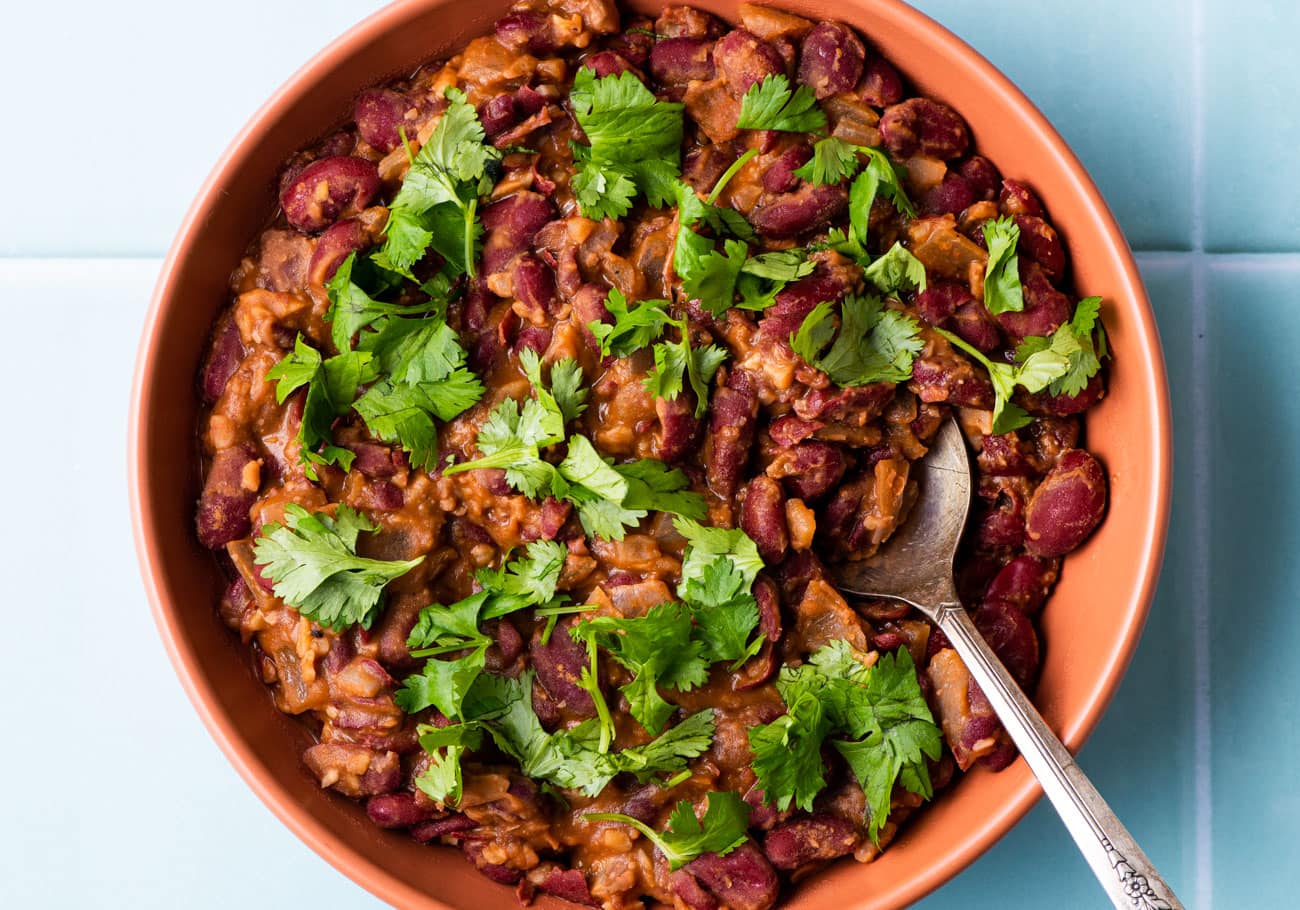
Lobio (Georgian Kidney Bean Stew)
- 2 cans (15 oz each) dark red kidney beans, drained, liquid reserved
- 1 cup raw walnut halves or pieces
- 2 medium yellow onions, finely diced
- 4 cloves garlic, minced
- 3 tbsp neutral oil (grapeseed or avocado)
- 2 tsp khmeli-suneli (Georgian spice blend — see note below)
- 1 tsp ground coriander
- ½ tsp ground fenugreek
- ¼ tsp cayenne or Aleppo pepper
- 2 tbsp red wine vinegar (or pomegranate vinegar if available)
- ½ cup fresh cilantro, roughly chopped
- ¼ cup fresh flat-leaf parsley, roughly chopped
- Salt and black pepper to taste
- ½–¾ cup reserved bean liquid or water
Khmeli-suneli note: This Georgian spice blend (coriander, fenugreek, marigold petals, dried herbs) is the single specialty ingredient in this dish. It's available at most Eastern European or Middle Eastern grocery stores and easily ordered online. If unavailable, substitute with an equal mix of ground coriander, dried thyme, and dried basil — the dish will still work but will lack some complexity.
Mchadi (Georgian Skillet Cornbread)
- 2 cups coarse stone-ground cornmeal (not fine polenta — texture is essential)
- ½ tsp kosher salt
- ¾–1 cup warm water
- 2 tbsp neutral oil for pan-frying
Pomidvris Salati (Georgian Tomato & Herb Salad)
- 4 medium ripe tomatoes, cut into rough wedges
- 1 small red onion, very thinly sliced
- 2 Persian cucumbers, sliced into rounds
- ¼ cup raw walnuts, roughly chopped
- 3 tbsp fresh cilantro, chopped
- 2 tbsp fresh flat-leaf parsley, chopped
- 2 tbsp walnut oil (or olive oil)
- 1 tbsp red wine vinegar
- Salt to taste
RECIPES
Lobio
- Toast the walnuts. In a dry skillet over medium heat, toast walnuts 4–5 minutes, shaking the pan, until fragrant and lightly golden. Remove and let cool. Once cool, pulse in a food processor or chop very finely by hand until they resemble coarse crumbs — not a smooth paste. Set aside.
- Soften the onions. Heat oil in a heavy-bottomed pot or Dutch oven over medium heat. Add onions and a pinch of salt. Cook, stirring regularly, until soft, translucent, and just beginning to color — about 12–15 minutes. Do not rush this step; the onions are the flavor base.
- Add garlic and spices. Add garlic and cook 1 minute. Add khmeli-suneli, ground coriander, fenugreek, and cayenne. Stir continuously for 1–2 minutes until fragrant and the spices have bloomed in the oil.
- Add beans and liquid. Add the drained kidney beans and ½ cup of the reserved liquid (or water). Stir well to combine. Bring to a gentle simmer, then roughly mash about one-third of the beans against the side of the pot with a spoon to thicken the stew. The consistency should be thick and cohesive, not soupy.
- Stir in walnuts and finish. Reduce heat to low. Stir in the ground walnuts. Cook 5 minutes more, adding a splash of liquid if the stew tightens too much. Add vinegar, taste, and adjust salt and acidity. The vinegar should be present but subtle — it lifts the walnuts without announcing itself.
- Finish with herbs. Off heat, stir in cilantro and parsley. Cover and rest 5–10 minutes before serving. The flavor deepens as it sits.
Mchadi
- Combine cornmeal and salt in a bowl. Add warm water gradually, mixing with your hands, until a firm dough forms that holds its shape when pressed. It should feel like stiff polenta — not wet, not crumbly.
- Divide into 8 equal portions. Shape each into a flat oval patty roughly ½ inch thick and 3 inches long.
- Heat oil in a cast iron or heavy skillet over medium heat. Cook patties in batches, 4–5 minutes per side, until deep golden with a light crust. The exterior should be slightly crisp; the interior will be dense and slightly chewy — intentionally so.
- Rest on a wire rack, not paper towels, to preserve the crust.
Pomidvris Salati
- Soak sliced onion in cold salted water for 10 minutes to soften the sharpness. Drain well.
- Combine tomatoes, cucumbers, and drained onion in a bowl.
- Whisk walnut oil, vinegar, and salt. Pour over the vegetables and toss gently.
- Add chopped walnuts, cilantro, and parsley. Toss once more. Taste and adjust seasoning.
- Refrigerate until serving. The salad holds well for up to an hour; beyond that the tomatoes soften.
COOKING ORDER (Stress-Free)
- Toast and grind walnuts → set aside
- Start onions for Lobio (this takes the most time — begin here)
- Make salad dressing and prep salad vegetables → refrigerate
- Add spices, beans, and liquid to Lobio → simmer
- Mix and shape mchadi dough
- Stir walnuts and vinegar into Lobio → rest off heat
- Pan-fry mchadi to order (serve fresh from the pan)
- Toss and finish salad just before serving
PRESENTATION & SERVING
- Lobio is traditionally served in a clay pot or a wide, rustic bowl. If you have a small cast iron pot, use it — the visual is authentic and adds to the story. Garnish with a small amount of extra fresh cilantro and a crack of black pepper.
- Mchadi should be served hot from the pan, stacked simply on a plate or wooden board. It is the utensil as much as the side dish — guests will tear pieces to scoop the lobio.
- Salat goes in a separate bowl and is meant as a bright, acidic counterpoint between bites of the rich bean stew. Keep it on the table throughout the meal.
- Serve family-style. This is communal food — individual plating would feel wrong for this cuisine.
- Optional: A small bowl of plain Greek yogurt on the table is not traditional but is a natural counterpoint for guests who want it.
COMBINED SHOPPING LIST
Produce
- 2 medium yellow onions
- 1 small red onion
- 1 head garlic
- 4 medium ripe tomatoes
- 2 Persian cucumbers
- 1 bunch fresh cilantro
- 1 bunch fresh flat-leaf parsley
Pantry
- Dark red kidney beans (2 cans, 15 oz each)
- Raw walnut halves or pieces (1½ cups total — 1 cup for Lobio, ¼ cup for salad)
- Coarse stone-ground cornmeal (2 cups)
- Khmeli-suneli spice blend (order online if not locally available)
- Ground coriander
- Ground fenugreek
- Cayenne or Aleppo pepper
- Red wine vinegar (or pomegranate vinegar)
- Walnut oil (or substitute olive oil)
- Neutral oil (grapeseed or avocado)
- Kosher salt, black pepper
Optional at the Table
- Plain Greek yogurt
- Extra red wine vinegar or pomegranate molasses