My wife and I just returned from seven days cruising the Galapagos Islands aboard the Origin, a 20-passenger yacht operated by Ecoventura. We'd visited Ecuador before, but the islands themselves had remained on our bucket list. Now that we've been, I understand why this place occupies such an outsized role in our understanding of evolution, ecology, and what it means to share a planet with creatures who have no reason to fear us.
Note: See the end of the post for some of our favorite photos!
This isn't a comprehensive wildlife guide. There are plenty of those already. Instead, I want to share what surprised us, what worked, what didn't, and the kind of practical details that might actually help you decide whether and when to make the trip yourself.
Why December Worked Perfectly
We traveled December 11-22, and the timing turned out to be ideal for reasons we didn't fully appreciate until we were there.
December marks the transition from the Galapagos cool/dry season into the warm/wet season. The research backs up what we experienced: seas were generally calm (with a couple notable exceptions during overnight passages), water temperatures were warming into the mid-70s F, and we had clear skies nearly every day. According to multiple sources, December offers some of the best conditions for both land and water activities, sitting in that sweet spot before the heat and humidity of January-March but after the rougher seas and cooler temperatures of June-November.
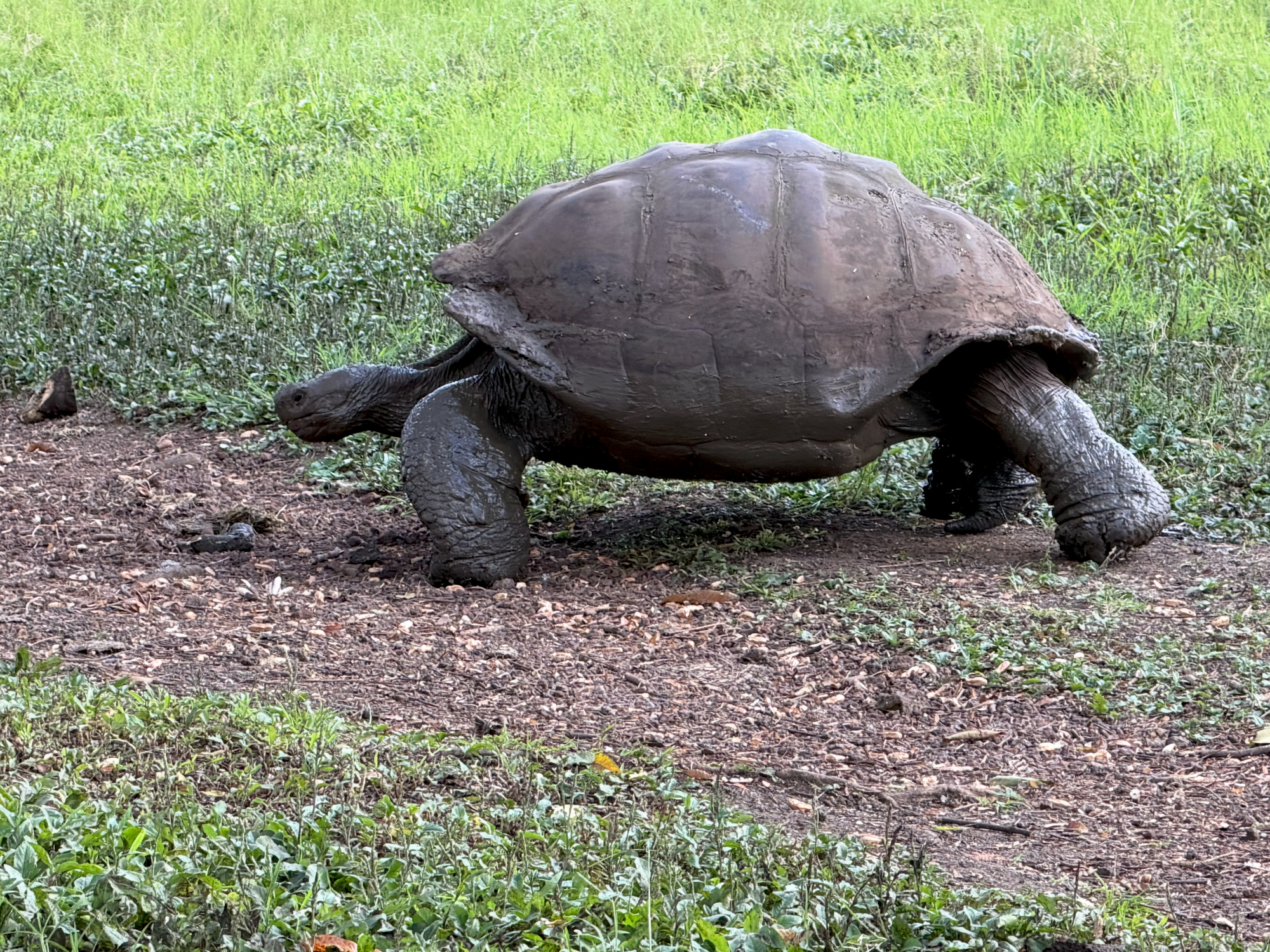
But the real advantage was biological timing. Our naturalist guides explained that giant tortoises begin their descent from the highlands to breeding grounds in January. In December, you can still find them in both locations. We saw dozens in the highlands of Santa Cruz, and the breeding center gave us context for the conservation efforts that brought several subspecies back from the brink of extinction.
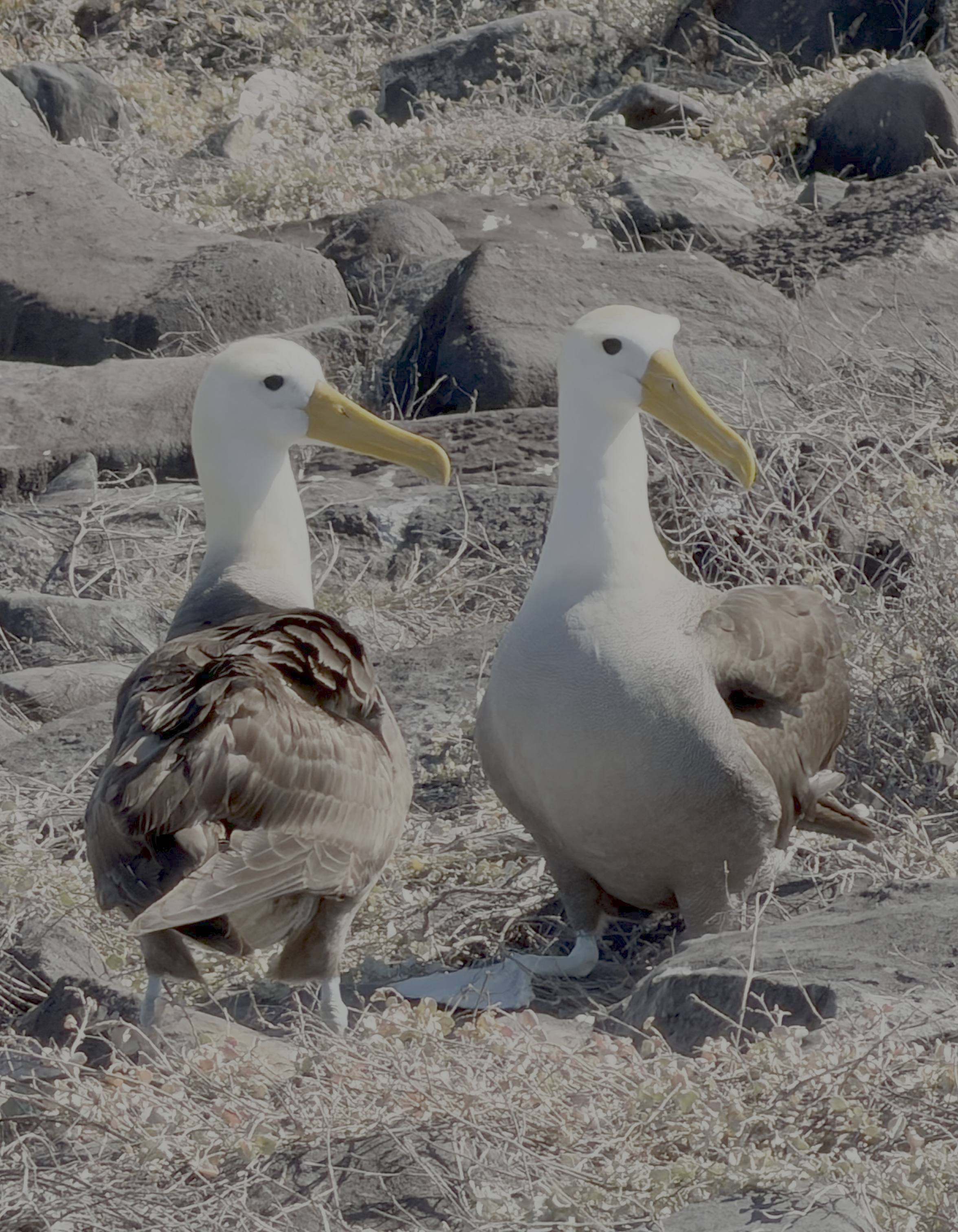
Even more striking were the waved albatross on Española Island. These remarkable birds spend most of the year at sea, returning to Española (their only breeding ground) from March through December. We arrived in mid-December just as pairs were performing their elaborate "goodbye" rituals before departing for several months of oceanic wandering. Watching these lifelong monogamous pairs engage in sky-pointing displays and bill circling before separating was genuinely moving. They'll return in March, somehow find their same partner again, and repeat the cycle.
The biological calendar doesn't care about your vacation schedule, but if you can swing December, you're catching wildlife patterns that don't repeat the rest of the year.
How the Week Actually Unfolded
Ecoventura handles the entire Galapagos portion seamlessly. On Sunday, December 14, they arranged our Avianca flights from Quito to San Cristobal via Guayaquil (you stay on the plane, it just picks up additional passengers). They paid park fees, handled all logistics, and transported us directly to the yacht. The only minor issue was that pretty much everyone on the three Ecoventura boats was on the same flight, about 60 people total, and most were accustomed to business or first class seating. Those sections filled immediately. But no one complained, and once we realized we were all heading to the same three yachts, it became an opportunity to start meeting fellow travelers before we even arrived.
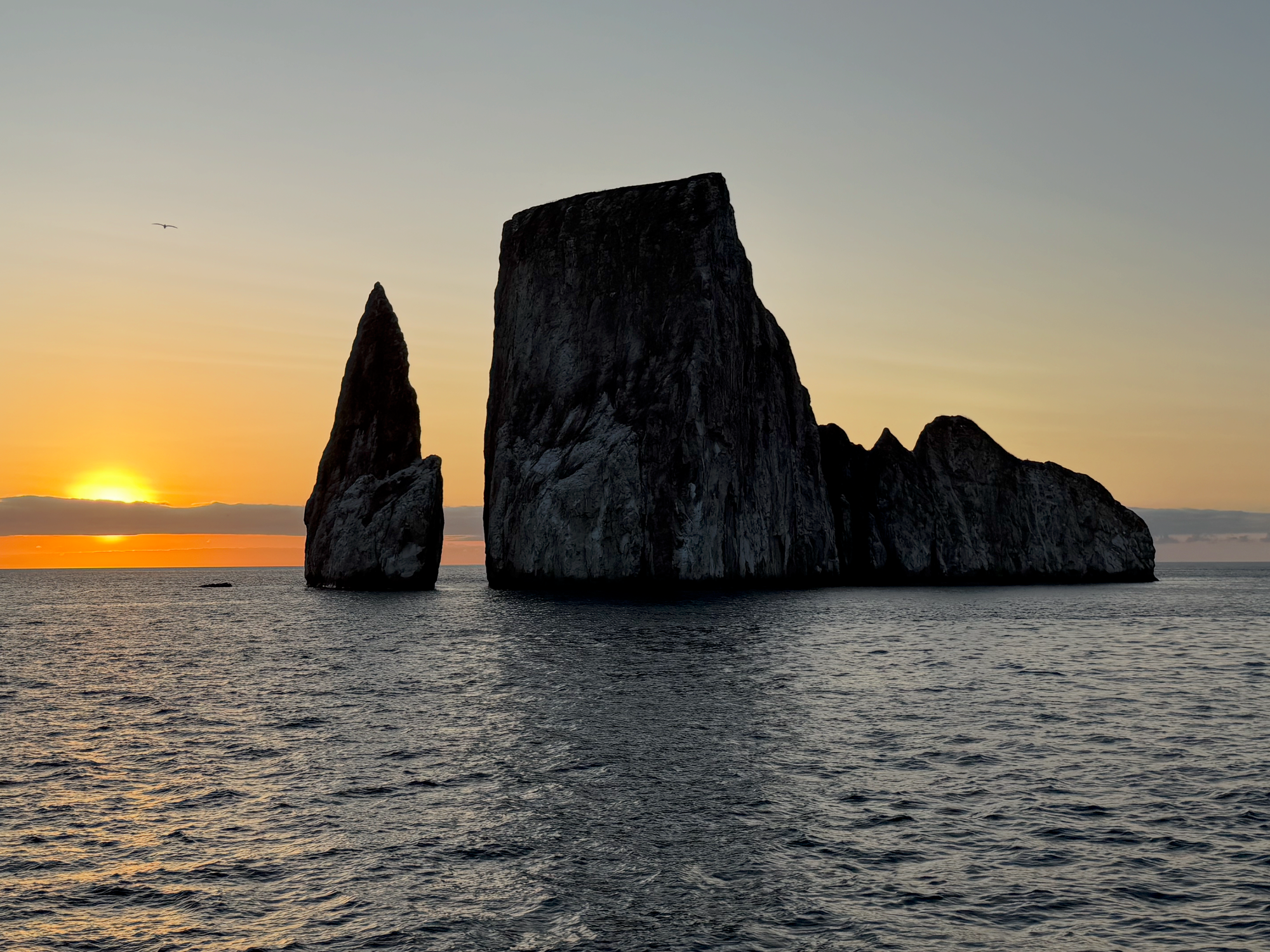
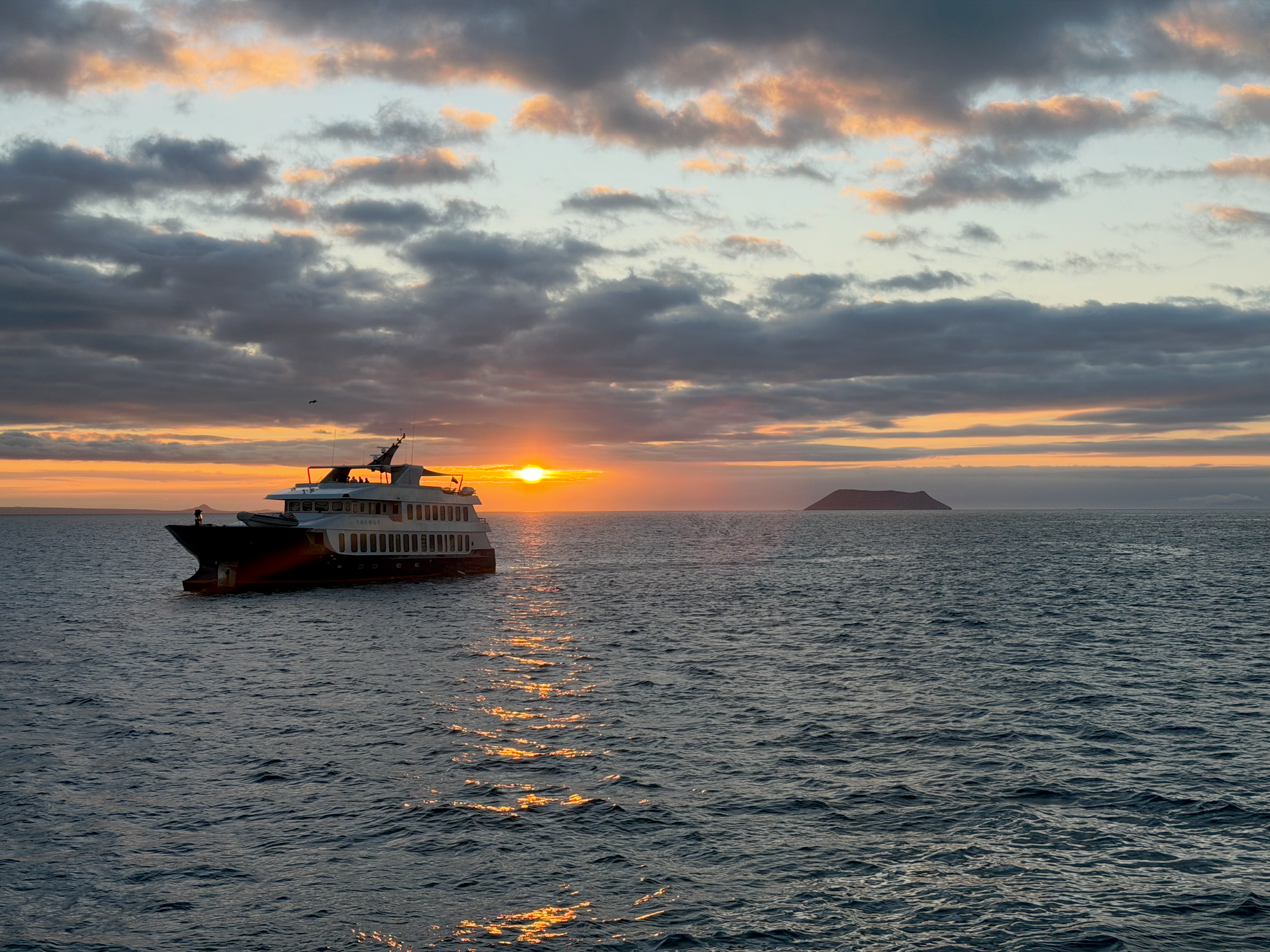
Our first impression boarding the Origin was clean, simple luxury and an extremely attentive crew. Sunday was spent exploring the yacht, getting fitted for wetsuits and snorkel gear, attending our first orientation briefing, and eating our first lunch and dinner aboard. We also started getting accustomed to the boat's movement, which would matter more once we hit open water. That evening, the yacht made its first move to Leon Dormido (Kicker Rock), where we witnessed spectacular sunset views of the dramatic volcanic rock formation rising from the sea.
Here's how the daily rhythm worked for the rest of the week:
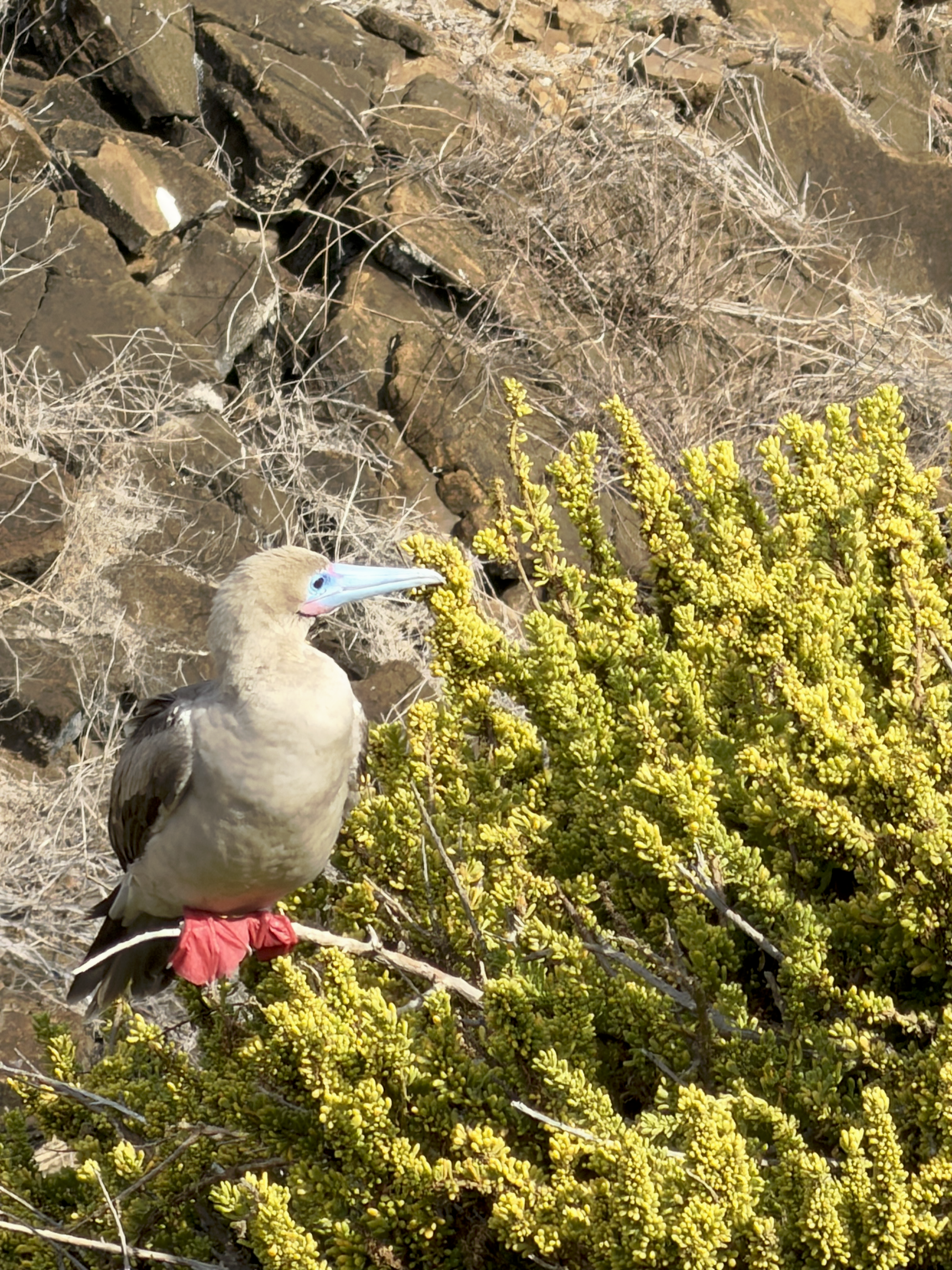
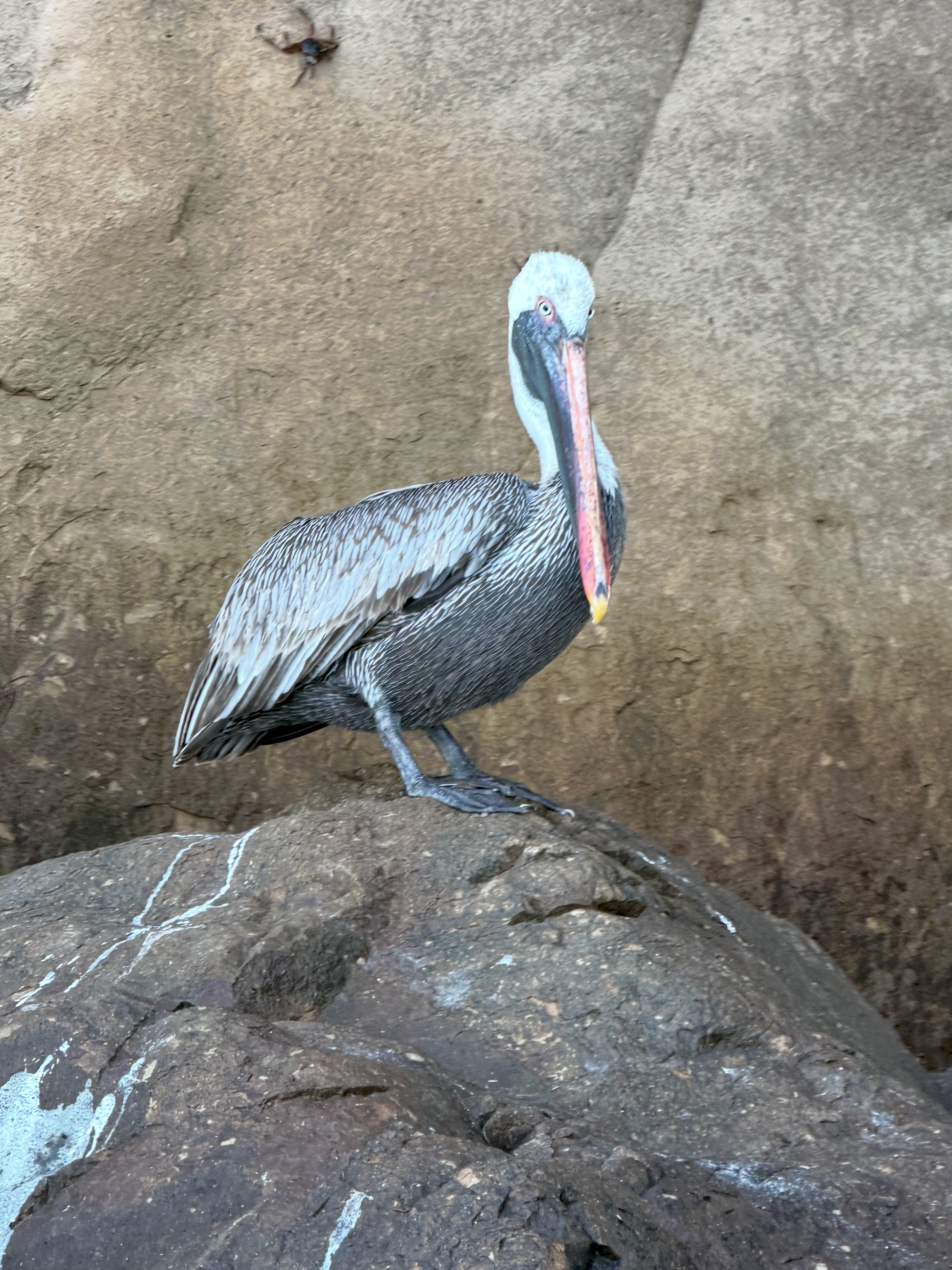
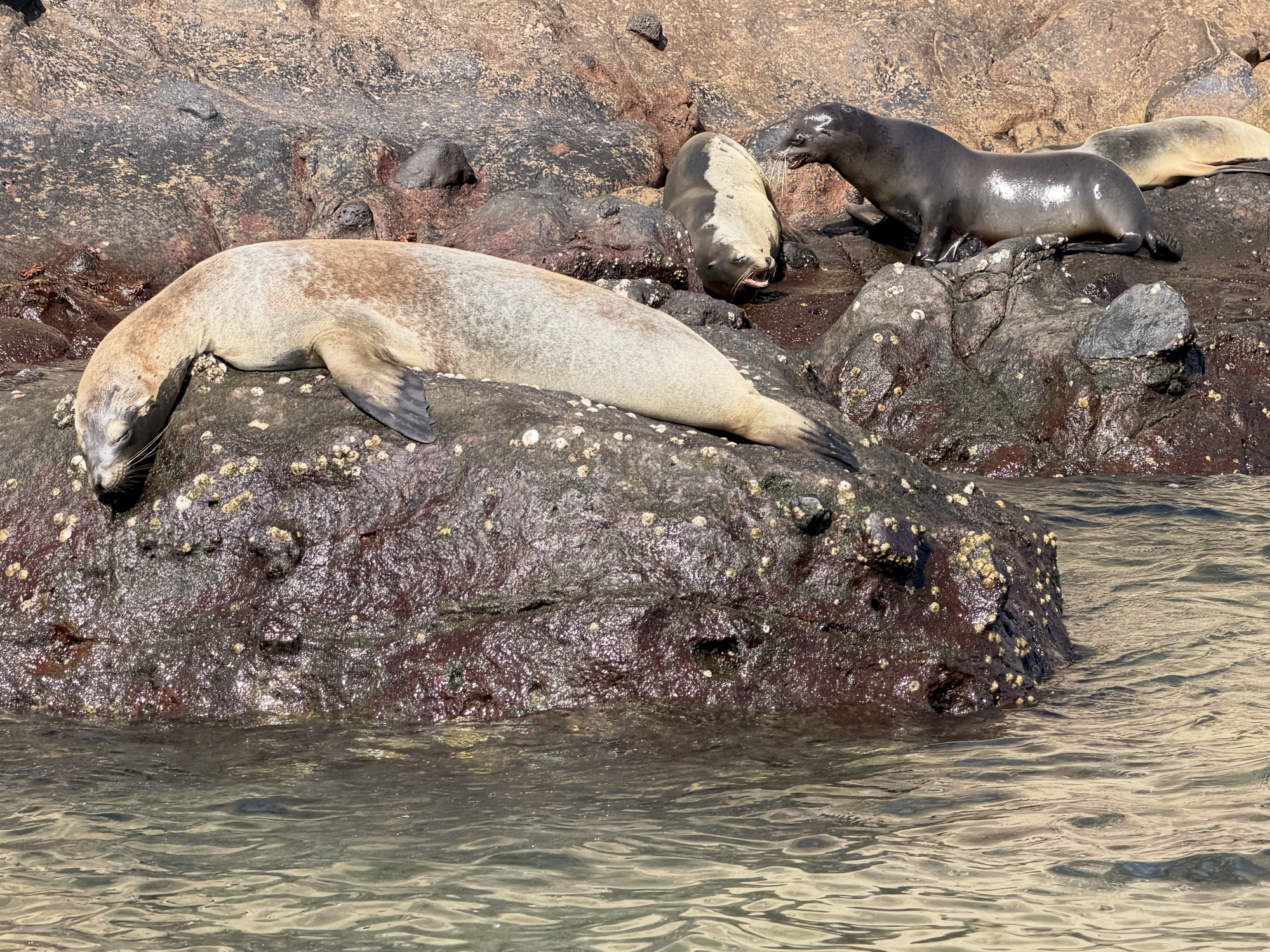
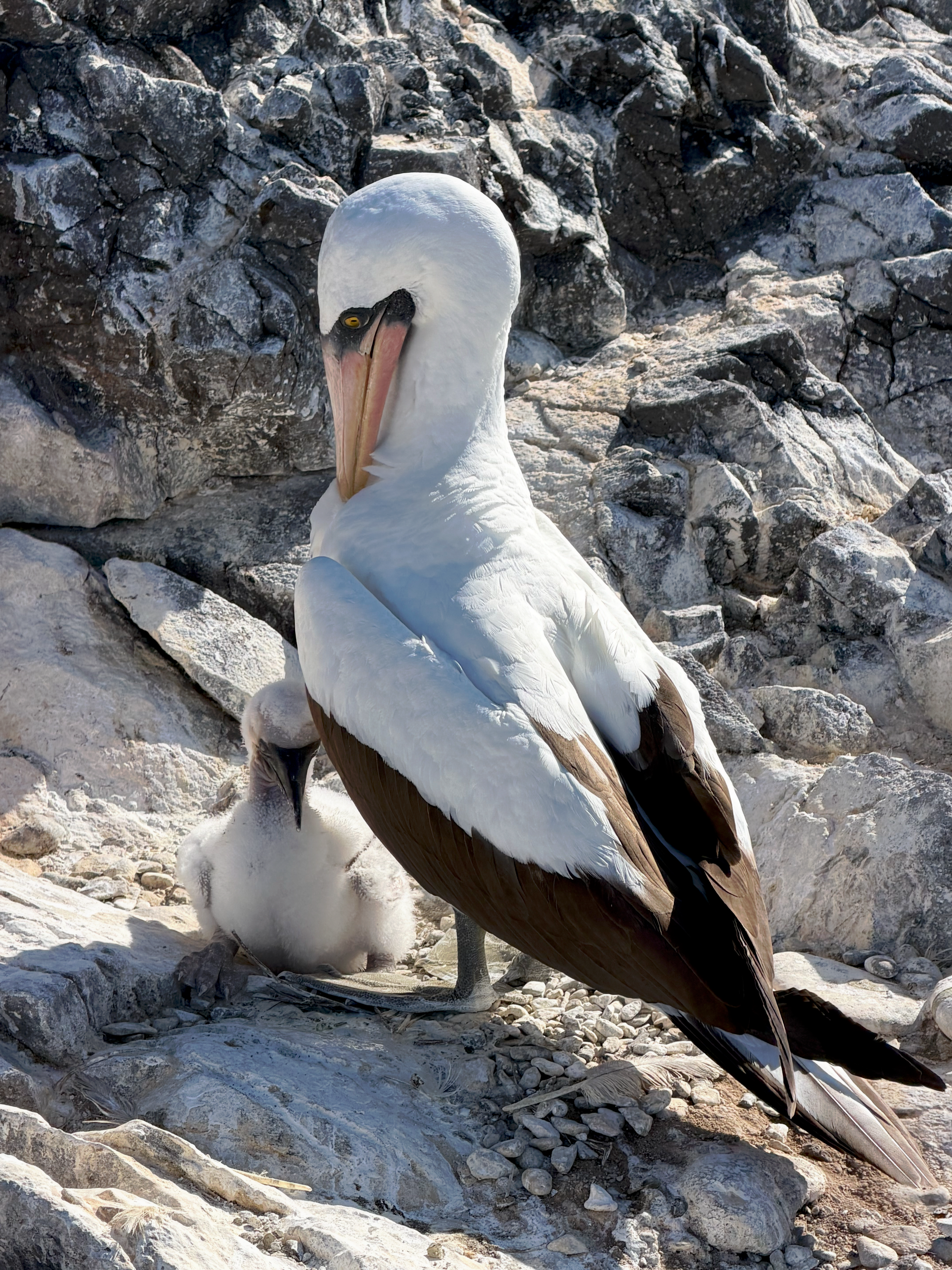
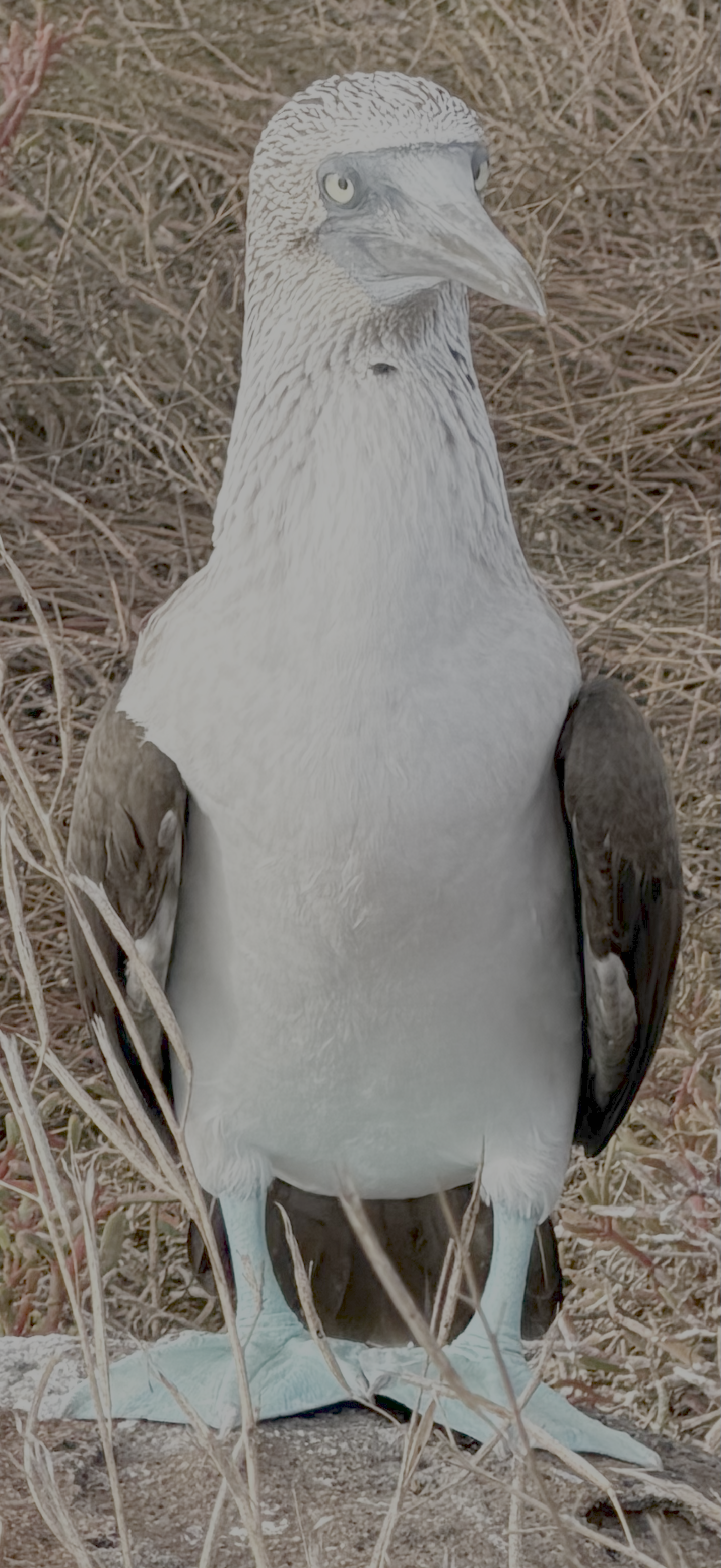
Monday, December 15 - San Cristobal Island: Wet landing at Punta Pitt early morning for our first encounter with truly unique Galapagos wildlife - red-footed and blue-footed boobies nesting in the same area, where our guides explained the differences in their hunting and nesting behaviors. The hike wasn't long but was surprisingly technical over sharp lava rock, challenging enough that some of the older passengers wisely chose to hold back. We followed this with snorkeling from the beach. The afternoon zodiac ride to Cerro Brujo revealed pelicans diving for fish, and then our first real appreciation for just how many sea lions inhabit these islands - numerous individuals lounging on the beach and playing in the water. This would become a pattern; sea lions were ubiquitous in huge numbers everywhere for the rest of the week. Another geology briefing rounded out the evening.
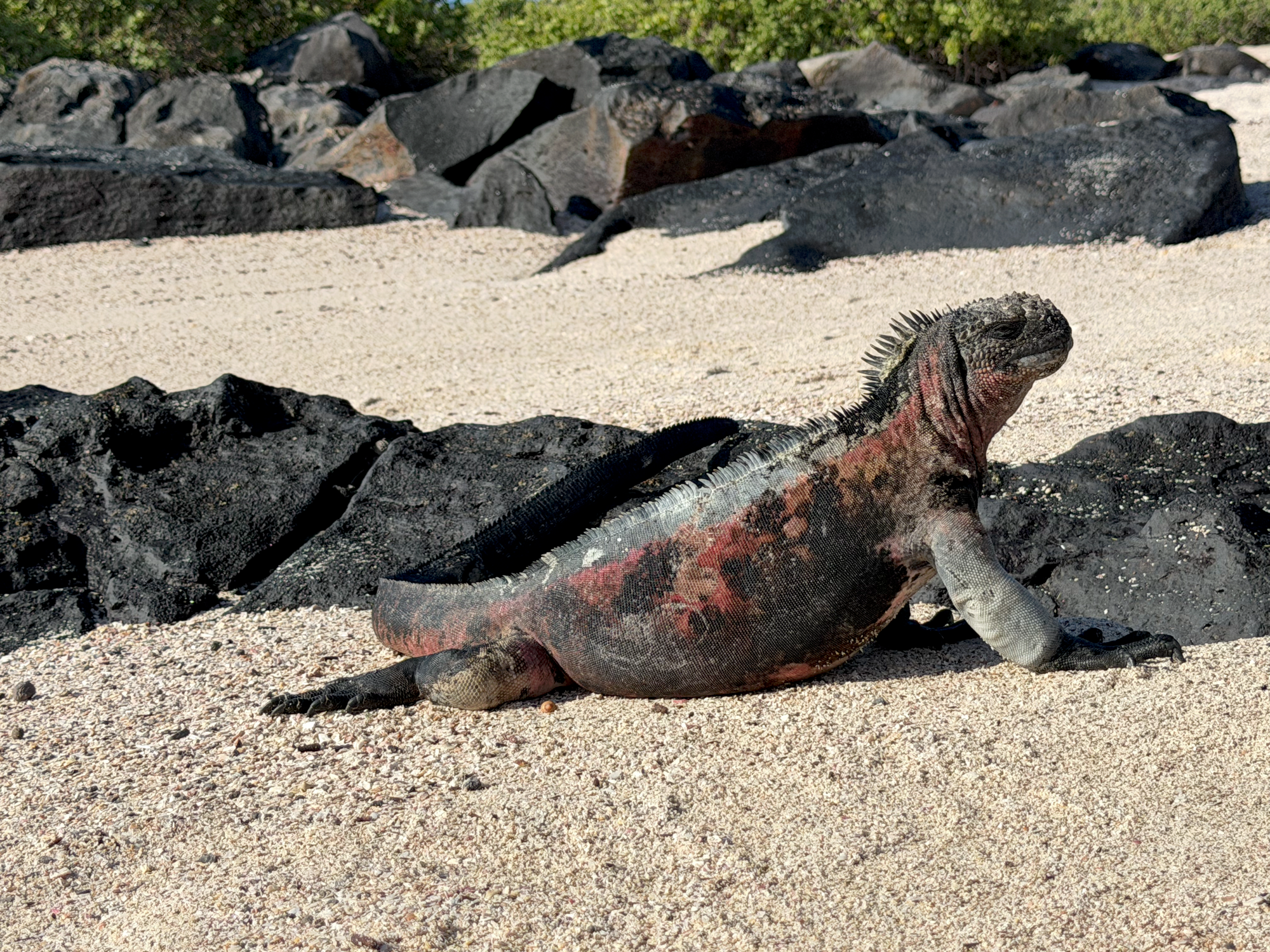
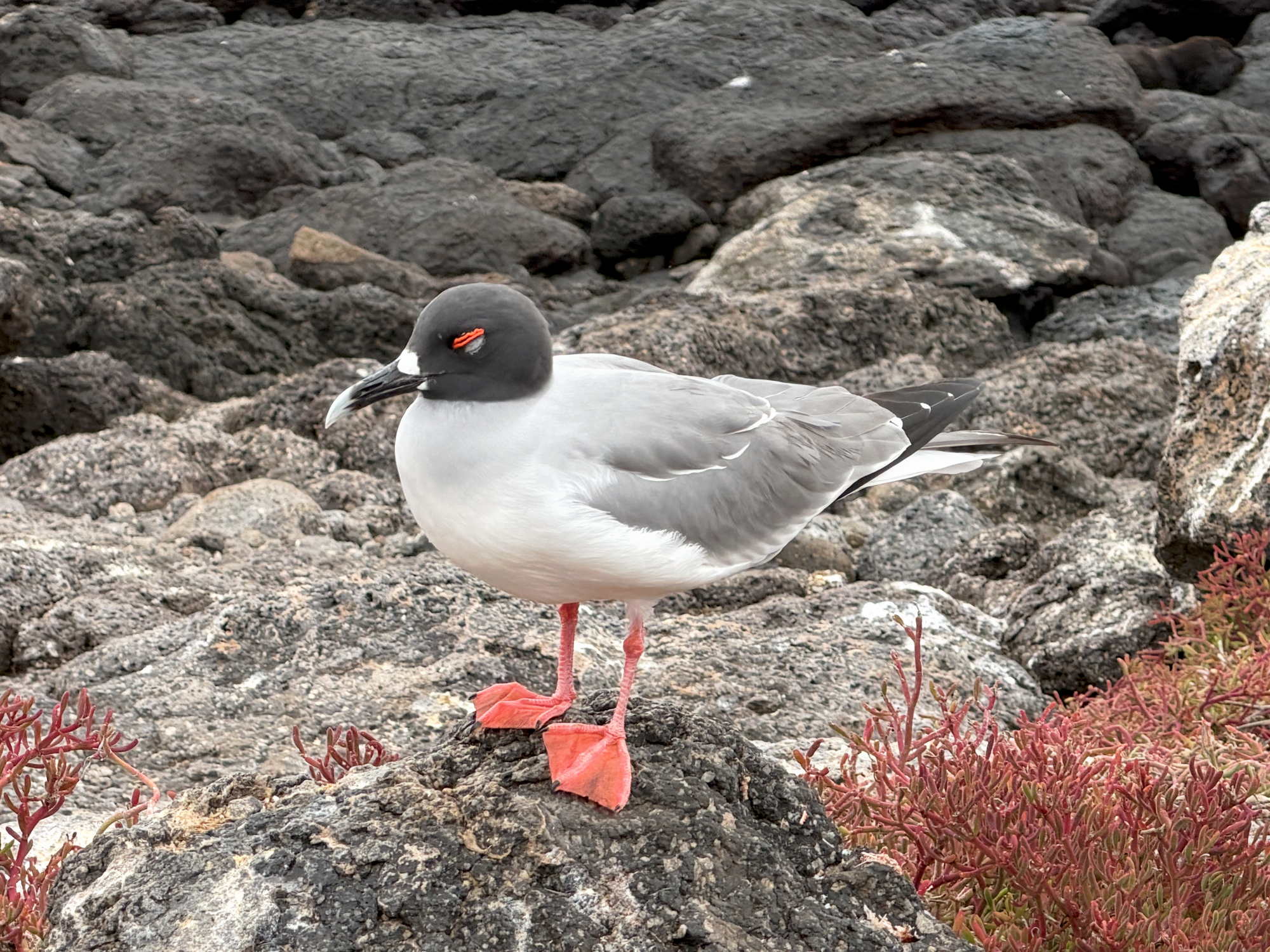
Tuesday, December 16 - Española Island: Morning dry landing at Punta Suarez for a rocky trail walk where we encountered the waved albatross pairs performing their goodbye rituals. We also saw numerous marine iguanas everywhere - they would become another constant presence throughout the week - along with swallow-tailed gulls raising their young. Afternoon activities at Gardner Bay and Gardner Islet included kayaking, paddle boarding, and snorkeling. The white sand beaches here were pristine, and we learned about the parrotfish contribution later.
Wednesday, December 17 - Floreana Island: Wet landing at Punta Cormorant, snorkeling at Devil's Crown (an eroded volcanic cone creating excellent habitat), then the famous Post Office Bay where we participated in the barrel mail tradition and heard the Essex intelligence story. We also visited Champion Islet and Baroness Point.
Thursday, December 18 - Santa Cruz Island: This was our town day. We visited the giant tortoise reserve in the highlands, then the Charles Darwin Research Station and breeding center in Puerto Ayora. We had free time to explore town in the afternoon, with cash recommended for any shopping.
Friday, December 19 - Santiago and Bartolome Islands: Morning kayaking and snorkeling at Chinese Hat (Sombrero Chino) where we had our remarkable penguin encounters and where I got my sea lion kiss. After lunch we cruised to Bartolome for afternoon snorkeling, then the iconic 350-step climb to the summit for one of the most photographed views in the Galapagos. We also visited Las Bachas and Black Turtle Cove.
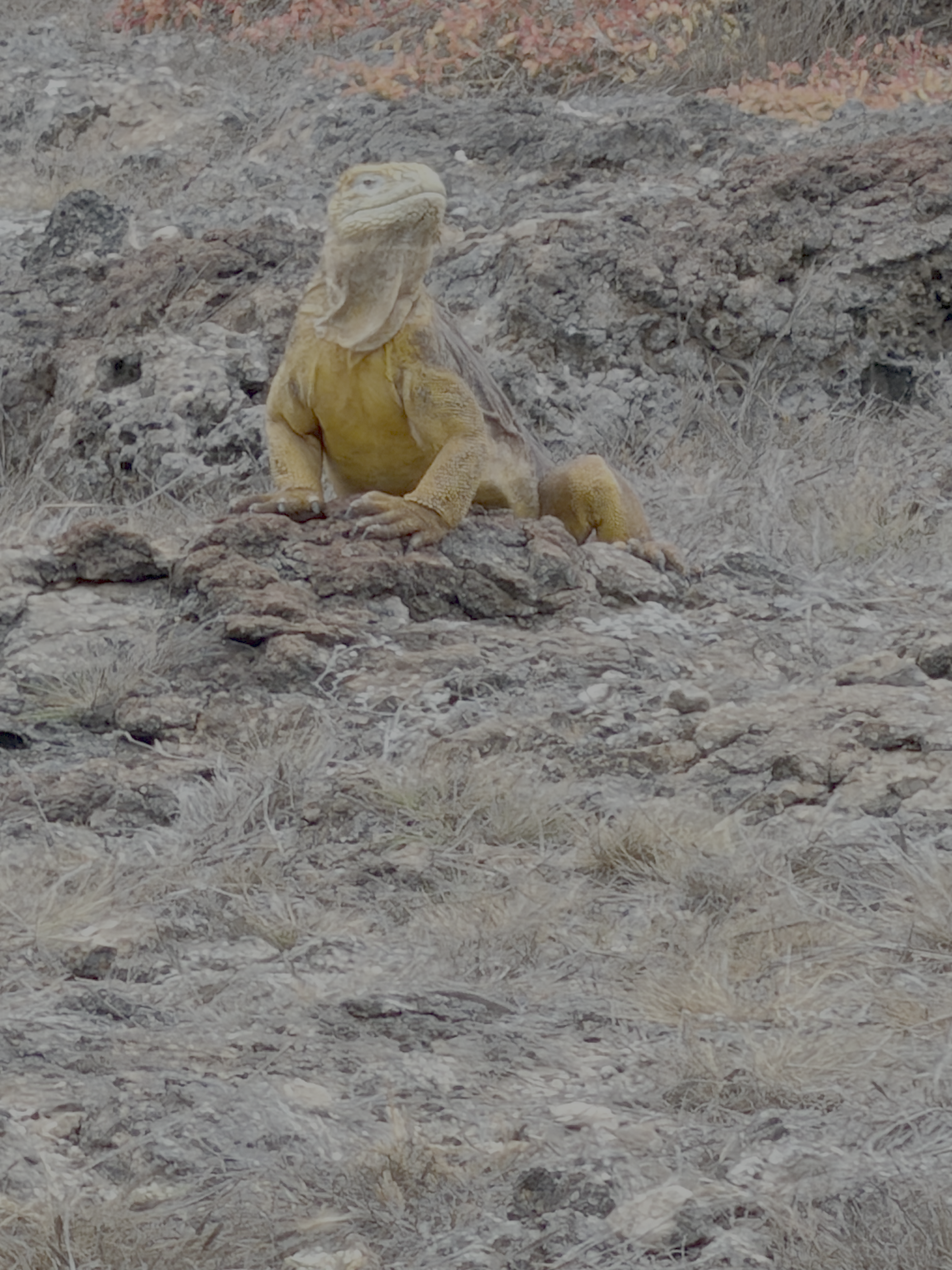
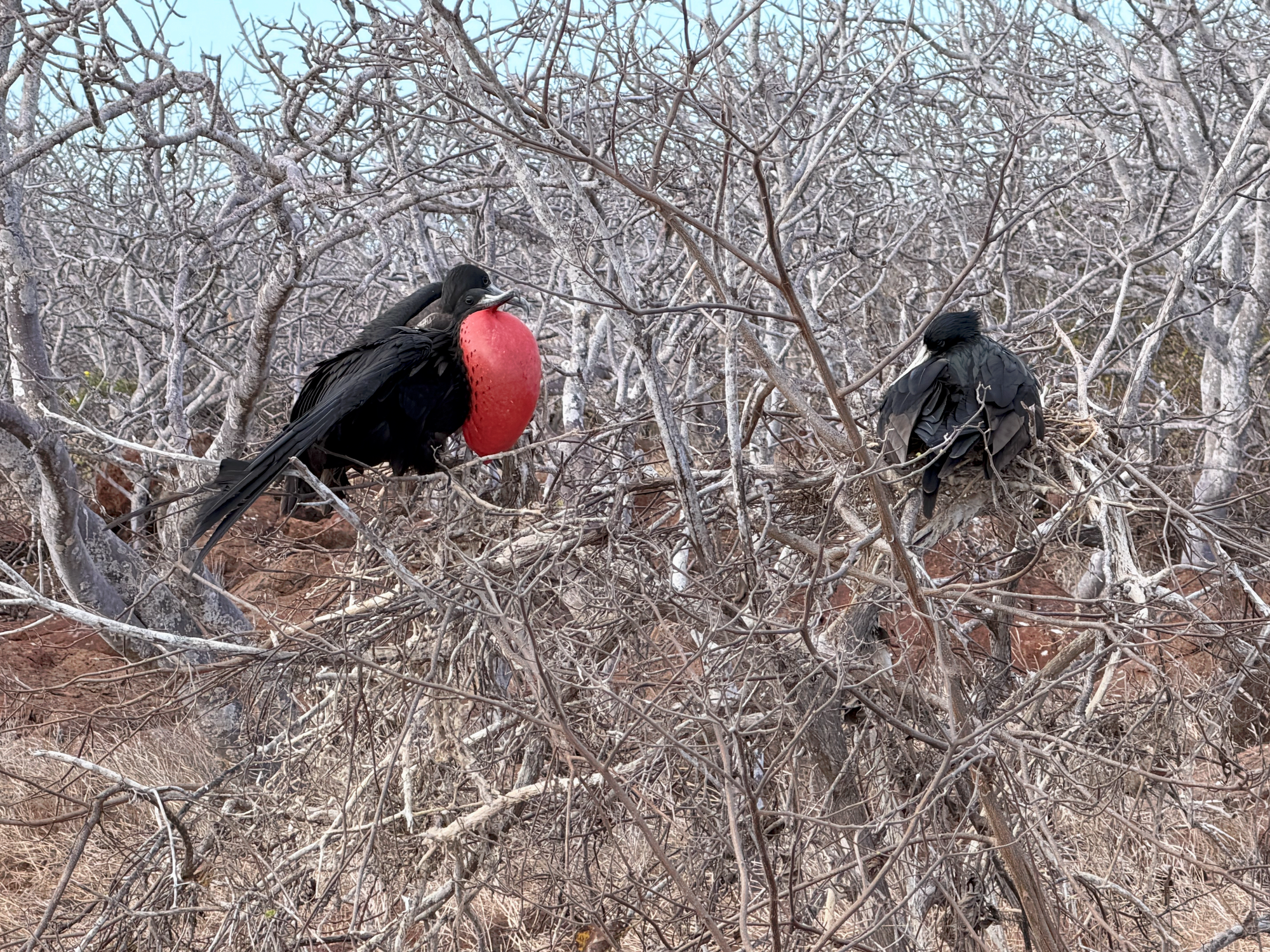
Saturday, December 20 - Plaza and Seymour Islands: Our final full day started with a dry landing and walk at South Plaza Island, followed by an afternoon at North Seymour with snorkeling and another landing. Here we saw magnificent frigatebirds with their enormous inflated red throat pouches on full display, more gulls, and many yellow land iguanas along with the ever-present marine iguanas. Captain Gerardo Durán and the crew hosted a farewell cocktail that evening.
Sunday, December 21: We disembarked after breakfast at 8:30am. Ecoventura handled all luggage and airport transportation, but before heading to the airport, they arranged a brief excursion to a local museum and into town for an early lunch on San Cristobal. Then it was the reverse Avianca flight via Guayaquil back to Quito, and the long journey home the next day.
The pattern was consistent: two excursions daily (sometimes three), each requiring zodiac transfers from the yacht to landing sites. You're genuinely active. But the crew managed everything so efficiently that it never felt rushed or chaotic despite the packed schedule.
The Post Office Bay Story You Haven't Heard
Most visitors to Post Office Bay on Floreana Island know the basic story: whalers in the late 1700s established an informal mail system using a wooden barrel. Outbound sailors left letters, homebound sailors collected any mail they could deliver, and the tradition continues today with tourists leaving postcards for other visitors to hand-deliver.
What our guide added was the military intelligence angle. During the War of 1812, Captain David Porter commanded the USS Essex on a remarkable Pacific cruise to harass British whaling ships. The challenge was finding ships in an ocean that vast. Porter's advantage came from former whalers in his crew who knew about the Post Office barrel. By checking the letters, Porter could determine which British ships had been in the area, when they'd passed through, and even infer their approximate locations and destinations from the correspondence. It was 19th-century SIGINT using handwritten letters as the signal.
The barrel became an intelligence gold mine. Porter captured or destroyed a dozen British whalers before the Essex herself was finally taken at Valparaíso. The Post Office that seemed like a quaint sailor tradition had briefly become a tactical asset in a naval campaign thousands of miles from any home port.
I appreciate stories like this because they remind you that apparently simple systems can have layers of complexity and consequence their creators never imagined. The whalers just wanted to send letters home. They created something that would serve both humanitarian and military purposes, and now exists primarily as a tourist attraction where we all participate in the same basic gesture those sailors made 230 years ago.
That Beautiful White Sand Is What You Think It Is
The beaches at Gardner Bay and other islands feature pristine white sand that photographs beautifully. Our guides cheerfully informed us that a substantial percentage of this sand is parrotfish excrement.
Here's what's actually happening: parrotfish have fused, beak-like teeth that scrape algae off coral surfaces. In the process, they inevitably consume chunks of coral skeleton (calcium carbonate). They have specialized grinding teeth in their throats called pharyngeal mills that pulverize this material, extract what nutrients they can, and excrete the rest as fine white sand.
The numbers are remarkable. Research indicates a single large parrotfish can produce 90 to over 450 kilograms (200 to 1,000 pounds) of sand annually depending on the species. Some studies in the Caribbean and Hawaii suggest that up to 70% of white sand beach material has passed through parrotfish digestive systems.
This matters for reef health too. By grazing algae, parrotfish prevent it from smothering coral. Remove the parrotfish through overfishing, and reefs can flip from coral-dominated to algae-dominated ecosystems. The sand production is almost a byproduct of their role as reef maintenance workers.
So yes, you're walking on fish poop. But you're also walking on evidence of a healthy reef ecosystem where herbivores are doing the work necessary to keep coral alive. That's the kind of connection that makes these islands special. Everything is interconnected in ways that become obvious once you look past the surface beauty.
The Galapagos Regulatory System Actually Works
One aspect that impressed me was how tightly controlled access is to landing sites. The Galapagos National Park doesn't just limit total visitor numbers. They regulate which ships can visit which sites at which specific times, down to the hour. This ensures that landing sites rarely have more than one small group at a time.
The system has interesting implications for choosing a cruise. Older, established operators like Ecoventura locked in access to prime itineraries years ago. Newer companies struggle to get permits for the best routes. This isn't publicly advertised, but it's worth understanding when comparing options. Two cruises might visit "the Galapagos" but if one has legacy access to better landing sites at optimal times, you're getting a different experience.
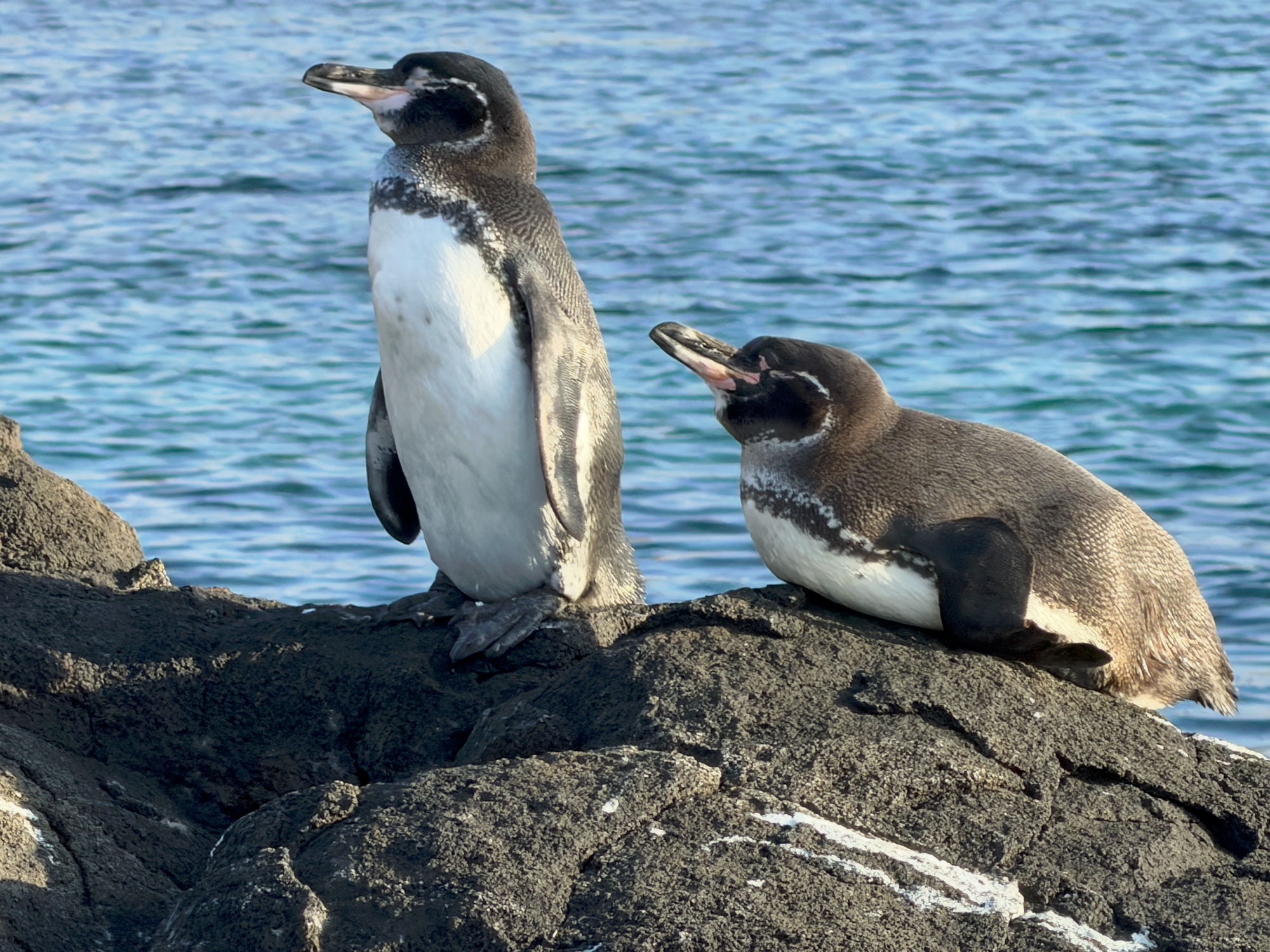
Our guides also explained that sometimes luck plays a role. Chinese Hat, where we stopped one morning, is a relatively newer addition to permitted sites. It turned out to be one of the few locations where Galapagos penguins regularly appear. We saw several. These are the only penguins north of the equator, made possible by the cold Humboldt Current that sweeps up from Antarctica. Finding them at Chinese Hat was partly good itinerary planning, partly regulatory happenstance.
The tight control also means that 100-passenger ships face significant logistical challenges. They can't land everyone at once, so they're constantly rotating groups, and each person gets less time at each site. The sweet spot seems to be 16-20 passenger yachts like the Origin. Small enough for intimate experiences, large enough to have proper facilities and stability.
Practical Matters: What Actually Worked
Seasickness: I brought scopolamine patches just in case but only needed non-drowsy Dramamine the first couple days. Seas were generally calm except during longer overnight passages, particularly the run to Santa Cruz. Even in harbor at Puerto Ayora, there was noticeable rolling. Most people acclimate within 48 hours. December typically offers calmer seas than the June-November period when southern trade winds create choppier conditions.
Boat selection: We specifically chose a small yacht (20 passengers) over larger ships. The tradeoff is more motion in swells versus better stability. But small groups are required for landing site regulations anyway, so large ships mean waiting your turn and less time ashore. We also learned that single-hull vessels like the Origin generally handle swells better than catamarans. Catamarans have shallower keels and different motion characteristics that can actually be worse for seasickness despite seeming more stable.
Photography: Several passengers brought heavy telephoto lenses and professional gear. Completely unnecessary. The defining characteristic of Galapagos wildlife is fearlessness. Evolution on isolated islands without land predators means animals simply don't flee from humans. You can walk to within a few feet of blue-footed boobies, marine iguanas, sea lions, frigatebirds. An iPhone takes excellent photos. The only caveat is National Park rules require staying certain distances back even if animals don't move, but you still don't need serious telephoto. Save yourself the weight and expense.
Shoes: The tour company recommended three pairs: boat shoes, water shoes with heel straps for wet landings, and hiking shoes for trails. We found a better solution: aggressive-tread water shoes with solid toe protection. I used Hoka Hoparas. They worked perfectly for both wet landings and all hiking. The terrain isn't technical enough to need dedicated boots. You're often crossing between wet and dry anyway. One less thing to switch and carry.
Photo organization: Take a photo of each day's printed schedule. These separate your photo library into sections with the activities and islands clearly referenced. When you have 800+ photos from a week, having those schedule photos as natural dividers makes sorting infinitely easier later.
Snorkeling: The water felt noticeably colder than similar temperatures in Hawaii, likely due to current patterns and wind. Full 3mm wetsuits were necessary and provided by the ship. Water visibility was murkier than Hawaii but that's because these are nutrient-rich upwelling waters. The tradeoff is you're swimming with sea lions, sea turtles, rays, and reef sharks in water that supports incredible marine biodiversity.
What Life Aboard the Origin Was Actually Like
The food exceeded expectations. Breakfast and lunch were extensive buffets with made-to-order eggs. Dinners were four-course affairs with choice of entrees (duck in red wine, pistachio-crusted catch of the day, etc.). Ecoventura sources 53% of ingredients locally from the Galapagos, which is both sustainable and results in excellent fresh fish. They easily accommodated our pescatarian preferences and even prepared special meals for Hanukkah.
Beyond meals, there were post-excursion snacks (pizza, sandwiches) after every landing, and a 24/7 snack station with unlimited drinks. You're burning calories hiking volcanic terrain and snorkeling in cool water. The constant food availability makes sense.
Every evening before dinner, the naturalist guides gave detailed presentations preparing us for the next day's islands, wildlife, and landing conditions. These weren't perfunctory briefings. They included geology, evolutionary biology, conservation challenges, and specific behaviors to watch for. Occasional special presentations covered topics like the formation of the archipelago or climate patterns.
The crew created surprisingly memorable moments. One night they dressed as pirates, "kidnapped" the captain, and refused to release him until everyone had danced sufficiently. With only 20 passengers, the atmosphere was playful and personal rather than corporate cruise ship formal.
Cabins were genuinely luxurious, and housekeeping bordered on psychic. Any time we left the room for more than a few minutes (meals, excursions, evening talks), we'd return to find it cleaned and refreshed. There was even a small gym, though after full days of hiking and snorkeling, I never used it.
The Origin has two identical sister ships (Theory and Evolve) that presumably offer similar experiences. This was not a budget option. But for a once-in-a-lifetime trip, the quality of accommodations, food, guides, and especially the itinerary access made it worthwhile.
Quito: The Gateway Logistics
We spent one full day in Quito before flying to the Galapagos and another night at the airport hotel on our return. Even though we'd visited Ecuador before, we took an Uber (one hour each way through horrible traffic) to explore the historic old town around Plaza San Francisco. Quito sits in a narrow valley between mountains, creating a linear city where traffic is consistently brutal.
The altitude (9,350 feet) can cause issues for some travelers. We didn't experience problems after a good night's sleep, but if you're concerned, the airport hotel option lets you acclimate before flying to the islands at sea level.
The Wildlife Question Everyone Asks
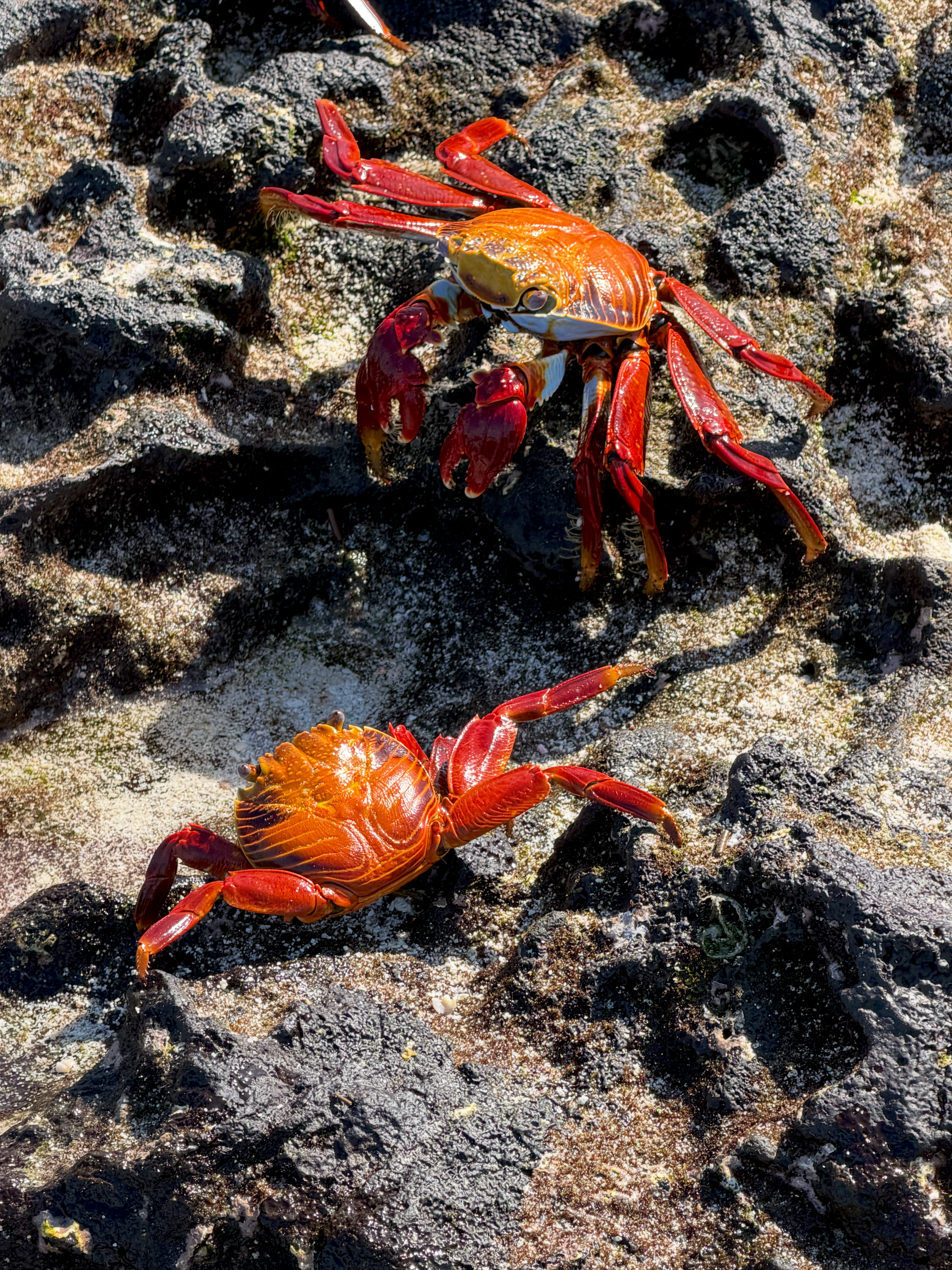
Yes, we saw everything. Sea lions at every island, sometimes dozens hauled out on beaches or bodysurfing in the shore break. Blue-footed boobies performing their high-stepping courtship displays. Marine iguanas clustered in masses that look like piles of dark lava rock until they move. Frigate birds with inflated red throat pouches. Giant tortoises grazing in the highlands. Sally Lightfoot crabs scuttling across black volcanic rock.
The penguins at Bartolome and Chinese Hat were particular highlights since they're so geographically unexpected. We saw waved albatross at Española during their departure rituals. At Chinese Hat, a young sea lion actually approached me while snorkeling and gave me what I can only describe as a kiss on the snorkel before swimming away.
The sheer density and proximity of wildlife is what makes the Galapagos special. It's not that these are necessarily rare species. It's that they're completely unbothered by human presence. A blue-footed booby on a nest will let you approach to within regulated distance and simply watch you with apparent curiosity. Young sea lions treat snorkelers as entertainment, swimming loop-de-loops around you for the fun of it.
This fearlessness exists because these animals evolved without land predators. Humans haven't been here long enough to teach them fear, and the National Park's strict protections keep it that way. You're experiencing something close to what Darwin saw in 1835, albeit with better weather gear and far more comfortable accommodations.
Would I Recommend It?
Without hesitation. But go with realistic expectations.
This is expensive. Between the cruise, flights, Quito hotels, and incidentals, budget accordingly. The Galapagos is a protected national park, not a beach resort. You're there for wildlife and landscapes, not luxury amenities (though the yacht had those too).
The trip involves physical activity. Multiple daily excursions, wet and dry landings from zodiacs, hiking over uneven volcanic terrain, snorkeling in cool water. Most people can handle it, but if mobility is limited, this may not be ideal.
You will get wet and dirty and salty. Bring quick-dry clothes and accept that you'll be damp much of the time. The experience is worth being slightly uncomfortable.
Do your homework on choosing a cruise. Ask about the specific itinerary, not just which islands but which landing sites and when. Ask about vessel size, hull type, naturalist guide qualifications, and how long the company has been operating (which correlates with itinerary access). Don't assume all Galapagos cruises are equivalent.
And seriously consider December if your schedule allows. The combination of good weather, calming seas, warming water, and wildlife timing (tortoises, albatross, penguins, sea lion pups) creates conditions that don't repeat exactly the same way other months.
We spent a week in a place where evolution's mechanisms are still visible in every interaction between species and environment. Where fish literally build beaches. Where intelligence officers once used love letters as tactical data. Where penguins thrive on the equator and albatross pairs reunite after months apart.
The Galapagos delivers on its reputation, but in ways more subtle and interconnected than the brochures suggest. It's not just about seeing rare animals. It's about witnessing an entire ecosystem where the usual rules of predator wariness and human-wildlife separation simply don't apply. That's worth the expense, the travel time, and the occasional bout of seasickness.
Here are some of our favorite photos, all shot with an iPhone 17 Pro.