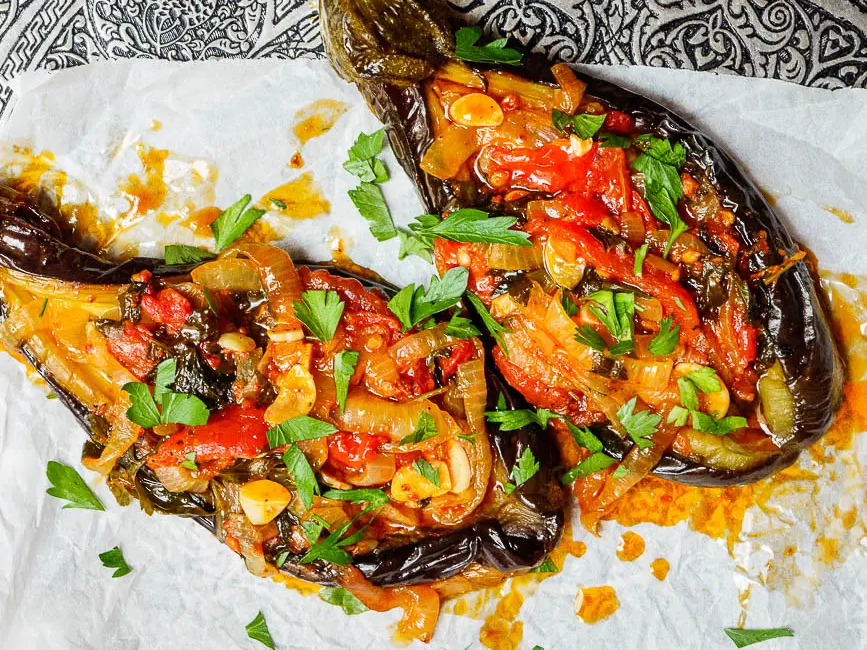
From my Cooking the World Series...
İmam Bayıldı (literally "the imam fainted") is one of the most emblematic dishes in Turkish home cooking and belongs to the zeytinyağlı tradition: vegetable dishes cooked gently in olive oil and typically served warm or at room temperature. The name is often explained—half-jokingly—by the lavish amount of olive oil traditionally used, which was both expensive and prized in Ottoman kitchens. More importantly, the dish exemplifies a core principle of Turkish cuisine: deep flavor without reliance on spices. Instead of spice blends, İmam Bayıldı builds richness through slowly softened onions, ripe tomatoes, garlic, and high-quality olive oil, allowing the eggplant itself to carry the dish.
Authentic versions are intentionally restrained. You will not find cumin, cinnamon, or allspice in classical preparations. Heat, if present at all, is subtle. The dish is about sweetness, silkiness, and balance—qualities that develop best when cooked gently and allowed to rest before serving.
A Note on Eggplants and Cooking Method
- Japanese eggplants are an excellent choice here. They are long, slender, thin-skinned, and less seedy—very similar to the varieties commonly used in Turkey. They hold their shape well and soften evenly.
- Slow roasting instead of frying is a very reasonable and modern adaptation. While shallow-frying is traditional, roasting still yields excellent texture and flavor, especially if you brush generously with olive oil. The dish remains authentic in spirit as long as the olive oil is not reduced to the point that the eggplant dries out.
İmam Bayıldı (Serves 4)
Side dish: Turkish Plain Rice (Pilav) or Cacık (Turkish Yogurt with Cucumber)
Ingredients
Eggplants
- 4 Japanese eggplants (about 8–9 inches long)
- 6–7 tablespoons extra-virgin olive oil, divided
- Salt
Filling
- 3 medium yellow onions, thinly sliced
- 4 cloves garlic, thinly sliced
- 3 ripe tomatoes, finely chopped (or 1½ cups good canned chopped tomatoes, drained)
- 2 tablespoons finely minced dried figs
- 2 tablespoons extra-virgin olive oil
- 1 teaspoon sugar (optional, helps balance acidity)
- Freshly ground black pepper
- ½ teaspoon Aleppo pepper (pul biber), optional and mild
- ¼ teaspoon ground cumin
To Finish
- ½ cup hot water
- Juice of ½ lemon (optional, use lightly)
- Fresh flat-leaf parsley, finely chopped
Instructions
1. Prepare the Eggplants
- Trim the stems, leaving a small cap for presentation.
- Peel alternating strips of skin lengthwise, creating a striped effect.
- Cut a long slit down the center of each eggplant, stopping short of the ends.
- Lightly salt the eggplants and let them rest for 20–30 minutes. Rinse and pat dry.
2. Slow-Roast the Eggplants
- Preheat oven to 400°F (205°C).
- Place eggplants on a parchment-lined baking sheet.
- Brush all over (including inside the slit) with about 4 tablespoons olive oil.
- Roast for 25–30 minutes, turning once, until softened and lightly golden but not collapsed.
- Remove and reduce oven temperature to 350°F (175°C).
3. Make the Filling
- Heat 2 tablespoons olive oil in a wide skillet over medium-low heat.
- Add cumin and let bloom briefly in the oil before adding onions.
- Add onions and a pinch of salt. Cook slowly for 15–20 minutes, stirring often, until very soft and lightly golden.
- Add garlic and cook 1 minute more.
- Stir in the minced figs and cook 1 minute more.
- Stir in tomatoes, sugar (if using), black pepper, and Aleppo pepper.
- Cook gently for 8–10 minutes, until thick, glossy, and fragrant. Taste and adjust salt.
4. Stuff and Bake
- Transfer eggplants to a shallow baking dish.
- Gently open each slit and generously stuff with the onion-tomato mixture.
- Pour ½ cup hot water around (not over) the eggplants.
- Drizzle remaining 1 tablespoon olive oil over the tops.
- Cover loosely with foil and bake at 350°F for 30–35 minutes, until completely tender.
5. Rest and Finish
- Remove foil and let cool for at least 20 minutes.
- Just before serving, drizzle lightly with lemon juice if desired.
- Garnish with chopped parsley.
How to Serve
- Traditionally served warm or at room temperature, not piping hot.
- Accompaniments: crusty bread, plain rice, or a simple yogurt on the side (not on top).
- This dish improves after a few hours of rest and is excellent the next day.