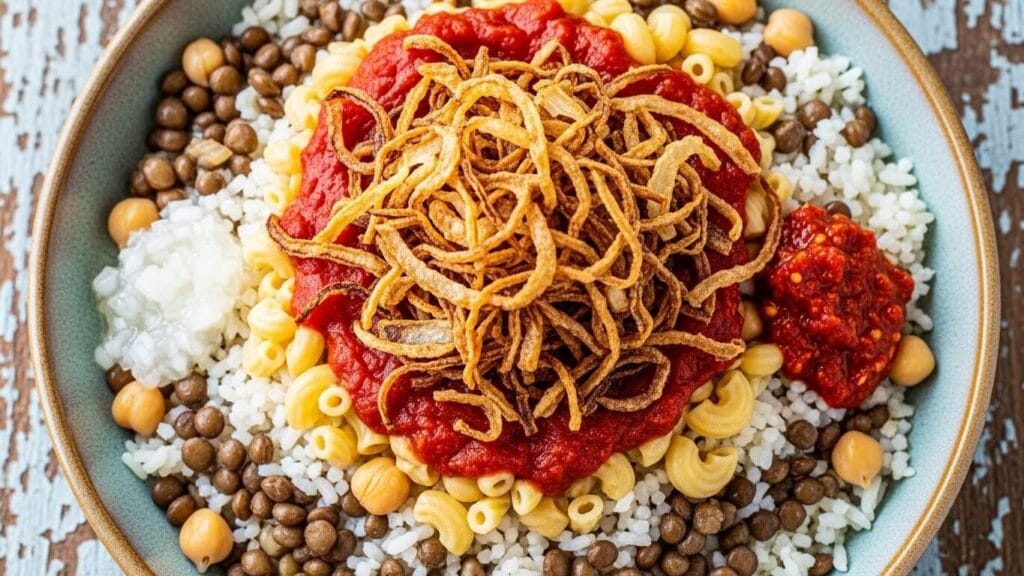
Serves: 4 · plated, customizable, and guest-friendly
From my Cooking the World Series...
Koshari is Egypt's most recognizable everyday food—less a fixed recipe than a framework for personal preference. Its origins in late-19th-century Cairo reflect the city's cosmopolitan makeup: rice and lentils as staples, pasta introduced through European influence, and a boldly spiced tomato sauce that anchored the dish in local taste. What elevated Koshari from sustenance to symbol was not refinement, but flexibility.
Culturally, Koshari is meant to be adjusted by the eater. Garlic vinegar (da'ah), chile sauce, extra tomato sauce, and additional onions are commonly requested at street stalls. Serving it at home with thoughtful structure—but clear permission to customize—honors this tradition while making it intuitive and elegant for guests.
Core Components
1. Lentils
- 1 cup brown or green lentils, rinsed
- Water
- Salt
Simmer in salted water until just tender (18–22 minutes). Drain well and set aside.
2. Rice
- 1 cup basmati or long-grain rice
- 1½ cups water
- 1 tbsp olive oil
- ½ tsp salt
Cook until fluffy and fully separate. Keep warm.
3. Pasta
- ¾ cup small pasta (ditalini, elbows, or broken spaghetti)
Cook al dente, drain, and toss lightly with olive oil.
4. Spiced Tomato Sauce (make extra by design)
- 2¼ tbsp olive oil
- 4 cloves garlic, minced
- 2¼ tsp ground cumin
- ¾ tsp ground coriander
- ¼–½ tsp chili flakes (optional)
- 2 cans (14–15 oz each) crushed tomatoes
- Salt
Sauté garlic gently in olive oil. Add spices, then tomatoes. Simmer 20–25 minutes until thick, savory, and spoonable (not watery).
Reserve:
- ~⅔ for plating and layering
- ~⅓ in a small bowl for diners who want more
5. Caramelized Onions (with optional extra)
- 4 large onions, thinly sliced
- 2½ tbsp olive oil
- Pinch of salt
Cook slowly over medium-low heat until deeply golden and sweet (25–30 minutes). Before plating, set aside a small portion to offer at the table.
Table Sauces (served separately)
Garlic-Vinegar Sauce (Da'ah)
- ¼ cup white vinegar
- ¼ cup water
- 2 cloves garlic, finely grated
- Salt
Chile Sauce
- 2 tbsp chile paste or harissa
- 1–2 tbsp water or tomato sauce to loosen
Three Small Sides
1. Tomato-Cucumber Salad with Lemon & Cumin
Diced tomato and cucumber, lemon juice, olive oil, salt, pinch of cumin.
2. Quick Pickled Vegetables
Carrots, turnips, or red onions in vinegar, water, and salt.
3. Warm Flatbread or Pita
Torn into small pieces for sharing.
Assembly & Presentation
Plating (per plate)
- Compact base of rice, slightly off-center
- Layer lentils and pasta, keeping edges visible
- Spoon a restrained amount of tomato sauce over the center
- Top with a small mound of caramelized onions
Sauce Guidance on the Plate
- Add a small smear of Da'ah on one edge
- Add a small smear of chile sauce on another edge
- Leave negative space for calm, modern presentation
At the Table
- Small bowl of extra tomato sauce
- Small bowl of extra caramelized onions
- Da'ah and chile sauce bowls remain available
Guests now:
- understand the flavor logic immediately
- choose their own heat, acidity, and richness
- feel invited to personalize without disrupting the plate
Combined Shopping List
Produce
- 4 large onions
- 4 cloves garlic
- 2 tomatoes
- 1 cucumber
- 1 lemon
- Optional: carrots, turnips, or red onion (for pickles)
Pantry
- Brown or green lentils
- Basmati or long-grain rice
- Small pasta (ditalini, elbows, or spaghetti)
- Crushed tomatoes (2 cans)
- Olive oil
- White vinegar
- Chile paste or harissa
- Ground cumin
- Ground coriander
- Chili flakes
- Salt
Bread
- Pita or flatbread