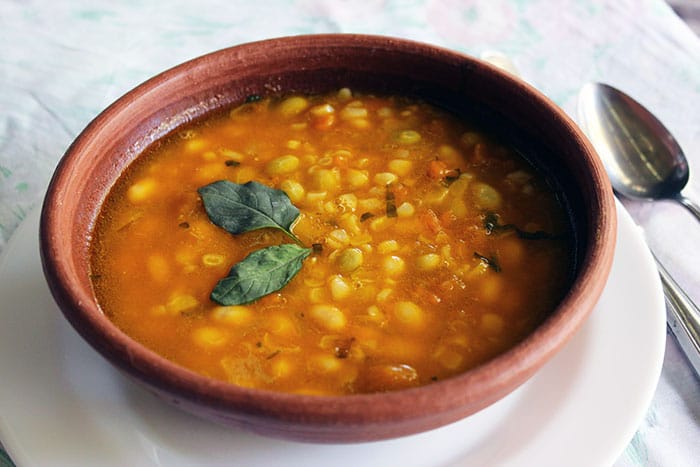
Serves: 4 Total time: ~55 minutes Difficulty: Moderate Diet: Vegetarian (fully vegan)
The Dish and Its Place in Chilean Life
Porotos Granados — literally "remarkable beans" — is one of the most distinctly Chilean dishes in existence, and one of the few that has no meaningful parallel elsewhere. It is built around three ingredients that arrive together in the Southern Hemisphere summer: fresh cranberry beans (porotos granados), field corn (choclo), and Chilean pumpkin (zapallo). The combination echoes the pre-Columbian three sisters tradition — beans, corn, and squash grown together as complementary crops — adapted through centuries of Chilean agricultural life into something that tastes wholly its own.
The dish is associated with January and February in Chile, when all three ingredients are at peak freshness in the Central Valley markets. Families cook it on weekday evenings and Sunday afternoons alike; it is not celebratory food but sustaining food, the kind that marks a season rather than an occasion. Basil — added in quantity at the very end — is non-negotiable. It lifts the stew from earthy to alive.
Outside Chile, the dish is almost unknown, which makes it an unusual case: a genuinely beloved national staple with essentially no diaspora footprint. Making it in April requires minor concessions to seasonality — frozen corn and butternut squash stand in capably for fresh choclo and zapallo — but the flavor logic remains intact.
Pebre, Chile's ubiquitous fresh condiment, accompanies almost everything on a Chilean table. It functions somewhere between a salsa and a sauce: bright, herbaceous, with varying heat depending on the cook. Served alongside crusty bread, it is the standard partner for Porotos Granados and provides the acidity and freshness the stew itself does not supply.
Ingredients
Porotos Granados
- 2 cans (15 oz each) cranberry beans (borlotti beans), drained and rinsed — or 3 cups cooked from dried
- 2 cups frozen corn kernels (or fresh if available)
- 2 cups butternut squash, cut into ¾-inch cubes (about ½ medium squash)
- 1 large yellow onion, finely diced
- 4 cloves garlic, minced
- 2 tbsp olive oil
- 1 tsp sweet smoked paprika (substitute for Chilean color, a mild annatto-based spice)
- ½ tsp dried oregano
- ½ tsp ground cumin
- 2 cups vegetable stock
- 1 cup water
- 1 tsp kosher salt, plus more to taste
- Freshly ground black pepper
- 1 large handful fresh basil leaves, roughly torn (do not substitute; do not add early)
Pebre (Chilean Fresh Condiment)
- 1 cup fresh cilantro, finely chopped (stems and leaves)
- ½ small white onion, very finely diced
- 1–2 serrano or jalapeño chilies, seeded and minced (adjust to heat preference)
- 2 cloves garlic, finely minced or grated
- 2 tbsp olive oil
- 2 tbsp red wine vinegar or fresh lemon juice
- ½ tsp salt
- 2–3 tbsp cold water (to loosen)
- Optional: 1 ripe Roma tomato, seeded and finely diced
To Serve
- Crusty bread or marraqueta-style rolls (Chilean bread rolls, or a good French baguette)
Instructions
1. Make the Pebre (10 minutes, make first)
- Combine cilantro, onion, chili, and garlic in a bowl.
- Add olive oil, vinegar, salt, and water. Stir to combine.
- If using tomato, fold it in now.
- Taste and adjust salt and acidity. The pebre should be bright and assertive — not shy.
- Cover and refrigerate while you cook the stew. It improves as it sits.
2. Build the Stew Base (15 minutes)
- Heat olive oil in a wide, heavy pot over medium heat.
- Add onion and a pinch of salt. Cook, stirring occasionally, until soft and translucent — 8–10 minutes. Do not rush; this is the flavor base.
- Add garlic, smoked paprika, oregano, and cumin. Stir and cook 1–2 minutes until fragrant.
3. Add Squash and Simmer (15 minutes)
- Add butternut squash and stir to coat in the aromatics.
- Pour in vegetable stock and water. Bring to a gentle simmer.
- Cook uncovered 12–15 minutes until squash is nearly tender but still holding its shape. It will finish cooking with the beans.
4. Add Beans and Corn (10 minutes)
- Add drained beans and frozen corn. Stir gently to combine.
- Simmer an additional 8–10 minutes. The stew should thicken as the squash breaks down slightly at the edges and the beans release starch. If it seems too thick, add a splash of water; if too thin, cook uncovered a few minutes longer.
- The consistency should be spoonable and cohesive — thicker than soup, looser than a braise.
5. Finish with Basil
- Remove from heat.
- Tear basil leaves and stir through the stew. Do not cook the basil further — it should remain vibrant green and fresh-tasting.
- Taste and adjust salt and pepper.
Cooking Sequence
- Make pebre → refrigerate
- Dice squash and prep aromatics
- Build stew base (onions first)
- Add squash, simmer until nearly tender
- Add beans and corn, finish cooking
- Tear in basil off heat, adjust seasoning
- Warm bread, bring pebre to table
Presentation
Serve Porotos Granados in wide shallow bowls — it should look substantial but not muddy. The color contrast between the white beans, orange squash, and yellow corn is part of the appeal; don't stir it to death. A few fresh basil leaves on top signal what's inside.
Place pebre in a small shared bowl at the center of the table with a spoon. The Chilean instinct is to spoon pebre directly onto the stew between bites, or onto torn bread eaten alongside. Do not pre-dress the bowls — let guests apply their own.
Bread is not optional. It plays the role that injera does for Ethiopia or flatbread for Lebanon: something to carry the stew, absorb the broth, and extend the meal.
Combined Shopping List
Produce
- 1 large yellow onion
- ½ small white onion (for pebre)
- 1 head garlic
- ½ medium butternut squash (~2 cups cubed)
- 1 large bunch fresh cilantro
- 1 large bunch fresh basil
- 1–2 serrano or jalapeño chilies
- 1 lemon (or use red wine vinegar)
- Optional: 1 Roma tomato (for pebre)
Pantry
- Cranberry beans / borlotti beans (2 cans, 15 oz each)
- Frozen corn kernels (2 cups)
- Vegetable stock (2 cups / 1 carton)
- Olive oil
- Sweet smoked paprika
- Dried oregano
- Ground cumin
- Red wine vinegar
- Kosher salt, black pepper
Bread
- Crusty baguette or rustic rolls (enough for 4)