Serves: 4–5
Total active time: ~60 minutes
Difficulty: Moderate
Diet: Vegetarian
The island of Zanzibar — officially Unguja, part of Tanzania — sits at one of history's great cultural crossroads. For centuries, Arab traders, Indian merchants, Bantu-speaking Africans, and eventually Portuguese and British colonizers moved through its port at Stone Town, and the island's food absorbed all of them.
What remains is a cuisine unlike anything else on the continent: coconut, tamarind, turmeric, and garam masala working alongside East African staples in combinations that feel both ancient and effortlessly inventive. Nowhere is this more vivid than at Forodhani Gardens, Stone Town's open-air waterfront night market, where vendors have cooked over charcoal every evening for decades. Two dishes define the experience.
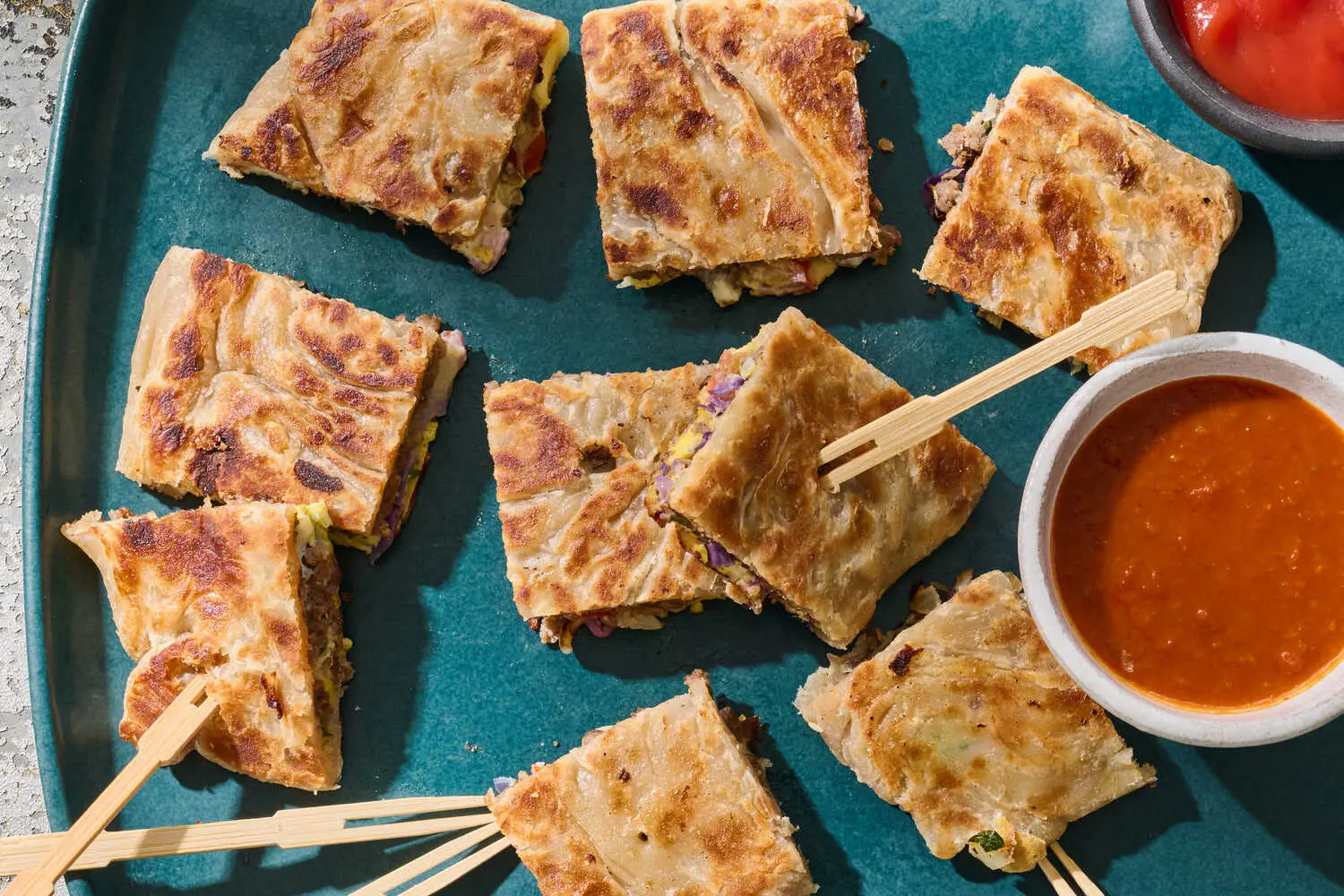
Zanzibari pizza — descended from the Indian chapati, adapted into a Kenyan keema chapati, then reimagined by a young Pemba vendor who couldn't explain it to tourists and simply called it pizza — is a folded paratha stuffed with spiced filling, egg, and vegetables and pan-fried until crisp. Beside it at every stall is urojo, a silky turmeric-and-potato soup that sounds deceptively simple until you taste its tartness, warmth, and depth. Coconut rice, a fixture of the Indian Ocean pantry from Zanzibar to Malaysia, ties the table together with richness and quiet sweetness. This is a meal that carries centuries of trade history in every bite.
Ingredients
Zanzibari Pizza — Vegetarian Filling
- 2 tbsp ghee (preferred) or neutral oil
- ⅓ cup shallots, finely chopped
- 1½ tsp garam masala
- 2 cloves garlic, grated
- 1-inch piece fresh ginger, grated
- 8 oz cremini mushrooms, very finely diced (processed in two batches in a food processor works well)
- ½ tsp kosher salt
- ¼ tsp black pepper
Zanzibari Pizza — Assembly
- 4–5 paratha (frozen, defrosted) or roti — see sourcing note below
- ½ cup cabbage, very thinly sliced
- ¼ cup plum or Roma tomato, chopped small
- ¼ cup shallots, finely chopped
- ¼ cup cilantro leaves and tender stems, chopped
- 4–5 large eggs (1 per pizza)
- 3–4 oz spreadable cheese, such as Laughing Cow (4–5 wedges), optional but recommended
- 2–3 tbsp ghee or neutral oil for pan-frying
Sourcing note — Paratha: Trader Joe's occasionally carries frozen paratha; Whole Foods usually does. An Indian grocery is the most reliable source. If unavailable, roti works — just handle it more gently when folding, as it tears more easily than paratha. Frozen Taiwanese green onion pancakes (sometimes at Trader Joe's or Ranch 99) are an excellent structural substitute with complementary flavor.
Simplified Urojo Soup
- 1½ lb Yukon Gold potatoes, peeled and cut into ½-inch cubes
- 3 tbsp all-purpose flour
- 1 tsp ground turmeric
- 1 small yellow onion or 2 shallots, thinly sliced
- Juice of 2 lemons or 3 limes (about 5–6 tbsp)
- 4 cups water
- 1 tsp kosher salt, plus more to taste
- Optional: 1–2 green chilies, slit
Urojo Toppings
- 2 eggs, hard-boiled and sliced
- 1 cup sev, Bombay mix, or crispy fried shallots (for crunch — see sourcing note)
- Fresh cilantro, roughly chopped
- Lime wedges
- Hot sauce (sriracha or piri piri work well)
Sourcing note — Sev/Bombay mix: Whole Foods and Lassen's sometimes carry Bombay mix in the snack or international aisle. If unavailable locally, order on Amazon — it keeps well and will get use. In a pinch, crispy fried shallots (available at Albertsons in the Asian foods section) provide a similar textural role.
Coconut Rice
- 2 cups jasmine rice, rinsed well
- 1 can (13.5 oz) full-fat coconut milk
- 1 cup water
- 1 tsp kosher salt
- Optional: 2 pandan leaves, knotted, or 1 stalk lemongrass, bruised and folded
Instructions
1. Urojo Soup (30 minutes, mostly passive — make first)
- In a medium pot, combine the potato cubes and onion with 4 cups water and the salt. Bring to a boil, then reduce to a steady simmer.
- In a small bowl, whisk the flour and turmeric with ½ cup of the hot cooking liquid until completely smooth and lump-free.
- Pour the flour slurry into the simmering pot, stirring constantly. Add the green chilies if using.
- Simmer uncovered for 15–20 minutes, stirring occasionally, until the potatoes are fully tender and the broth has thickened to a silky, slightly viscous consistency — it should coat a spoon lightly.
- Stir in the lemon or lime juice. Taste and adjust salt and acidity. The soup should be distinctly tart and warming. Keep warm on the lowest possible heat.
2. Coconut Rice (20 minutes, passive — start after soup)
- Combine the rinsed rice, coconut milk, water, salt, and pandan or lemongrass (if using) in a medium saucepan.
- Bring to a boil over medium-high heat, stirring once. Reduce heat to the lowest setting, cover tightly, and cook 15 minutes.
- Remove from heat and rest, still covered, for 5 minutes. Remove aromatics and fluff gently. Keep covered until serving.
3. Zanzibari Pizza — Filling (15 minutes, can be made ahead)
- Heat ghee in a medium skillet over medium-high heat. Add shallots and cook, stirring, until softened, about 2 minutes.
- Add garam masala, garlic, and ginger. Cook 1 minute until fragrant.
- Add mushrooms. Cook over medium-high heat, stirring frequently, until they release and then reabsorb their liquid and become dark and compact, about 8–10 minutes. Do not rush this — properly dried-out mushrooms hold together in the paratha without making the dough soggy.
- Season with salt and pepper. Transfer to a bowl to cool slightly.
- Once cooled to warm (not hot), add the cabbage, tomato, shallots, and cilantro. Crack in one egg per pizza you plan to make and stir everything together until the egg is distributed throughout. Set aside.
Note: The filling can be made up to this point and refrigerated up to 3 days. Bring to room temperature before assembling.
4. Zanzibari Pizza — Assembly and Pan-Frying (20 minutes)
Work one pizza at a time to maintain control. Keep finished pizzas warm in a 200°F oven while you cook the rest.
- Lay a paratha flat on parchment paper dusted with a little flour.
- Place approximately 1 scant cup of filling in the center, leaving a 1-inch border on all sides. Break 1 wedge of Laughing Cow cheese over the filling if using.
- Fold the edge of the paratha closest to you about ½ inch over the edge of the filling. Repeat with the opposite side, then fold in the two remaining sides to form a square packet. Press gently to seal.
- Heat 1½ tsp ghee in a small nonstick skillet over medium heat. Lift the parchment and slide the paratha packet carefully into the pan, seam-side down.
- Cook until the bottom is light golden brown, 3–4 minutes. Flip carefully with a wide spatula and cook the other side until golden and the egg is fully set, another 3–4 minutes.
- Slide onto a baking sheet and keep warm in the oven. Add 1 tsp ghee to the pan and repeat with remaining parathas.
Cooking Sequence
- Make urojo soup and bring to simmer → maintain on low heat throughout
- Hard-boil eggs for urojo toppings → peel and slice
- Start coconut rice
- Make pizza filling while rice cooks
- Rest rice, assemble and pan-fry pizzas one at a time
- Plate everything simultaneously
Presentation
Urojo soup: Ladle into shallow bowls. Top each with 2–3 slices of egg, a small handful of sev or Bombay mix (add just before serving so it stays crunchy), a pinch of fresh cilantro, and a squeeze of lime. Serve the hot sauce on the side so guests can control heat. The soup should look golden-yellow and slightly brothy, with visible potato and a crunchy crown of topping.
Zanzibari pizza: Flip each finished pizza so the seam side faces down on a cutting board. Cut each into nine squares using a tic-tac-toe pattern — two cuts in one direction, two in the other. Arrange on a shared platter or individual plates. Serve ketchup and hot sauce alongside for dipping; these are authentic accompaniments, not optional.
Coconut rice: Serve in a simple bowl or mound alongside. It functions as the neutral, cooling element — not the star.
Table setup: Put all three components out simultaneously. The interplay is the point: a square of pizza dipped in hot sauce, a spoonful of tangy soup, a bite of coconut rice. Encourage guests to mix rather than eat sequentially.
Combined Shopping List
Produce
- Shallots (4–5 medium, used across both filling and pizza assembly)
- Cremini mushrooms (8 oz)
- Cabbage, green (small head — you need ½ cup)
- Plum or Roma tomatoes (1–2)
- Cilantro (1 bunch)
- Fresh ginger (1 small piece, ~2 inches)
- Garlic (1 head)
- Lemons (2) or limes (3–4, used across soup and serving)
- Yukon Gold potatoes (1½ lb)
- Yellow onion (1 small)
- Optional: 1–2 green chilies
Dairy & Refrigerated
- Eggs (6–7 total: 4–5 for pizza filling, 2 for urojo topping)
- Spreadable cheese, such as Laughing Cow (4–5 wedges, optional)
- Ghee (small jar — used for filling and pan-frying; available at Albertsons, TJ's, Whole Foods)
Pantry
- Paratha, frozen (4–5 pieces — TJ's, Whole Foods, or Indian grocery)
- Jasmine rice (2 cups)
- Full-fat coconut milk (1 can, 13.5 oz)
- All-purpose flour (small amount — already likely on hand)
- Ground turmeric
- Garam masala
- Kosher salt, black pepper
- Hot sauce (sriracha, piri piri, or similar)
- Ketchup
Specialty
- Sev or Bombay mix (Whole Foods, Lassen's, or Amazon) — a bag will keep for months and is worth having on hand
- Optional: pandan leaves (frozen, Asian grocery) or lemongrass (Whole Foods produce)