Continuous Means Continuous, not December
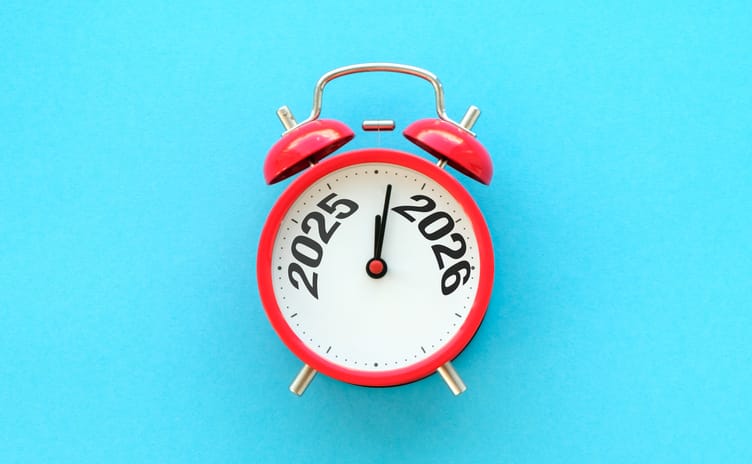
Here we are again. The annual madness. That magical time when otherwise rational people convince themselves that December 31st turning into January 1st somehow matters.
You know what's coming. The frantic scramble to finish projects that weren't important enough to finish in June. The forced year-end reviews. The budget planning sessions that will consume hundreds of hours to predict things that won't happen. The New Year's resolutions that'll be abandoned by February. The retrospectives, the goal-setting, the strategic planning sessions, all timed to this arbitrary calendar event that has about as much cosmic significance as Arbor Day.
I've been ranting about this for over fifteen years, and I'm not stopping now. Call it my annual tradition, if you want to be ironic about it.
The Big Question Nobody Wants to Answer
What is so damn special about December 31st becoming January 1st?
Seriously. I want someone to explain to me, using actual logic, why the Gregorian calendar's rollover should determine when we reflect, plan, and make decisions. The Romans picked this date somewhat arbitrarily (thanks, Julius Caesar and Pope Gregory XIII), yet here we are in 2025, running our businesses and lives like these ancient guys had some profound insight into optimal management cycles.
They didn't.
The worst part? Those of us in the continuous improvement world should know better. We literally have the word "continuous" right there in the name. Not "annual." Not "year-end." Continuous.
The Day I Stopped the Insanity
About fifteen years ago, I was president of a roughly $100 million medical device manufacturing company. Good company, smart people, solid performance. But we were caught in the same trap as everyone else, this yearly budgeting ritual that consumed vast resources and produced questionable value.
Then I attended a Lean Accounting Summit where Steve Player gave a presentation that changed everything. Steve asked the question I just asked you: what's so special about the calendar year? Why are we "budgeting to the wall" with the wall being December 31st?
He walked us through the absurdity of the whole process. Think about it. In October, we'd start building budgets for the following year. We'd gaze into our crystal balls and try to predict what would happen in December of the next year. That's 14 months away. Who the hell can predict what's going to happen 14 months from now?
Nobody, that's who.
But we'd do it anyway. We'd spend thousands of hours, pulling in people from operations and finance, trying to forecast every little expense down to the decimal point. We knew it would be wrong before we even finished. The spreadsheet wasn't dry before it was obsolete.
Then, the real waste kicked in. Each month we'd spend even more hours doing variance analysis. Why didn't actual performance match our 14-month-old guess? Let me think. Maybe because it was a guess made 14 months ago by people who aren't fortune tellers?
My CFO and I sat on the plane ride home from that conference, looked at each other, and made a decision. We sent an email to the finance and executive team before we even landed.
"Budgets are cancelled. Effective immediately." (Yes, the joys of a private company with supportive owners!)
What Happened Next
You might expect chaos. We got the opposite.
Instead of thousands of hours spent on budget theater, our finance team became integrated with operations. Instead of managing in hindsight, constantly explaining why our guesses were wrong, we focused forward on identifying and analyzing real opportunities with real data.
We stopped trying to constrain decisions to arbitrary timeframes. Instead, we made the best decision with the information available at that moment. If an opportunity arose in March, we didn't wait until the next budget cycle or worry about whether we'd "budgeted for it." We evaluated it on its merits and made a call.
We focused on continuous improvement, comparing ourselves to the previous period, trying to be better. Not hitting some forecast made months earlier by people who couldn't possibly have known what would happen.
The relief was immediate and palpable. We freed up massive resources that had been deployed to hindsight management and redirected them to understanding current costs and potential improvements. Improvement accelerated.
Later, I'd discover Toyota kata, and it clicked. This is exactly what we'd stumbled into. A continuous improvement process enabled by looped, recurring small experiments iterating from a current state toward a desired future state. Not annual strategic plans. Not five-year forecasts. Small experiments, rapid learning, constant adjustment. You run an experiment, you reflect on what happened, you adjust, you run another experiment. Continuous. The calendar doesn't tell you when to learn, the experiment does.
Hansei: The Art of Continuous Reflection
Hansei, reflection, is powerful. Critical, even. But it needs to be continuous, just like improvement itself.
Here's what I've learned about hansei over the years: it works at multiple timescales, and none of them should be constrained by arbitrary calendar boundaries.
Daily hansei happens after experiments, after problems occur, after small wins. What did we learn today? What worked? What didn't? These quick reflections, often just a few minutes, compound into significant insights over time.
Project-based hansei happens when something completes. Not when the month ends or the quarter closes, but when the actual work finishes. What did we learn? What would we do differently? What surprised us? This is when you capture the knowledge before people forget or move on.
Deeper reflection happens every few weeks or months based on what you've discovered works for learning and improvement. I've found four to six weeks hits a sweet spot that allows sufficient activity to reflect on while maintaining good recall of what actually happened. Not monthly (that's still letting the calendar boss you around), but based on actual learning cycles.
High-level hansei might happen annually, but not because it's December 31st. It's because sometimes you need to step back and look at longer patterns and trajectories. Maybe you do this during a vacation when you have space to think deeply. Maybe you do it when you hit a major milestone. The timing should serve the reflection, not the other way around.
The key is that hansei itself is continuous. It's how you recalibrate your iteration from current state to desired future state. You reflect, you adjust your understanding, you refine your target condition, you design better experiments.
Journaling helps enormously with this. I've been using well-worn Moleskines for years, and the act of writing things down, then reviewing them weeks or months later, uncovers patterns and situations that less deliberate methods miss completely. You see the thread that connects seemingly unrelated events. You notice the same obstacle appearing in different contexts. You recognize growth you didn't realize was happening in the moment.
But you can't do this if you only reflect once a year. By then, the details are fuzzy, the context is lost, and you're left with vague impressions instead of actionable insights.
The Retirement Revelation
Here's something that's become even clearer since I retired: the arbitrary nature of time is largely a social construct we choose to accept.
When I was working, weekends were different from weekdays. Monday was Monday. Friday was Friday. There was a rhythm to it, dictated by when other people expected me to be available and productive.
Now? Every day is a weekend. Or every day is a weekday. The distinction doesn't exist unless I choose to create it. And you know what I've discovered? The work I want to do doesn't care what day of the week it is. Learning doesn't respect weekends. Curiosity doesn't take holidays.
The same applies to year-end. December 31st only matters if you let it matter. The reflection I'm doing right now isn't happening because it's late December. It's happening because I'm in a place conducive to deep thinking, I have the time and space to do it properly, and enough has happened since my last deep reflection that it's worthwhile.
This freedom from calendar tyranny is incredibly liberating. It also makes it painfully obvious how much energy we waste in organizations trying to align everything to arbitrary time boxes.
The Real Damage
The cost of year-end madness goes beyond wasted time in budget meetings. It's insidious.
Budgets constrain thinking. Once you've committed to a budget, especially a detailed one, you stop looking for opportunities outside that budget. You optimize for hitting the forecast rather than creating value. You sandbag projections to make sure you can beat them. You make dumb decisions in December to "make the year look good."
Sound familiar?
I've watched companies refuse to pursue genuinely good opportunities in August because "it's not in the budget." I've seen projects artificially constrained to calendar years when they'd naturally take 14 months or 9 months. I've seen manufacturing teams crank out unnecessary production in late December to hit annual targets, creating inventory waste and disrupting flow.
It's like we're all in some collective delusion, pretending that Earth's orbit around the sun should dictate business decisions.
A Better Way Forward
Here's what actually works, based on that experiment we ran fifteen years ago and what I've seen work elsewhere:
Make decisions with current information. Not 14-month-old predictions. Not next year's budget. Today's reality and the best data available right now.
Use rolling forecasts. Look ahead whatever time period is appropriate for your industry, but update it at shorter periods based on what you're learning. The future keeps changing, so your view of it should too.
Compare against relative targets, not absolute numbers. Are we getting better? Are we improving versus last quarter, last year, our competitors? That's what matters.
Focus on process improvement, not hitting arbitrary targets. If you improve the process, the numbers take care of themselves.
Experiment continuously. Small tests, rapid learning, quick pivots. Toyota kata, if you want to get technical about it. Don't wait for the annual planning cycle to try something new.
Reflect regularly and deliberately. Daily after experiments. When projects complete. Every few weeks for deeper patterns. Maybe annually for high-level trajectory, but not because the calendar says so. Make hansei itself continuous, not periodic.
The Challenge
The end of the calendar year is convenient. Everyone's thinking about the past and future anyway. The holidays create natural breaks. There's a certain poetry to fresh starts and new beginnings.
But poetry doesn't create value for customers. Good decision-making does. Continuous improvement does. Learning from experiments does. Making the best choice with current information does.
So this December, as you're inevitably pulled into year-end activities (because unless you're the president with a supportive CFO, you probably can't just cancel everything), ask yourself: why are we doing this now? Does the timing add value? Would this be better done in March? Or July? Or on a rolling six-week cycle?
Here's my real challenge to you: don't just think about this once a year. Think about it continuously. Act on it continuously. Reflect continuously. Improve continuously.
And maybe consider what you could do with all those hours you'll spend in budget meetings, variance analysis sessions, and year-end reviews if you weren't constrained by the arbitrary tyranny of the calendar year.
Continuous improvement means continuous. Not annual. Not quarterly. Not monthly. Continuous.
Happy arbitrary calendar rollover, everyone. May your continuous improvement actually be continuous moving forward.